Do you remember the last time you said, “Okay, I’ll start eating healthier from Monday”? And you started, you truly tried, but a bit later the habit faded.
Seasonal or yearly resolutions, starting over from next week's plans tend to fall apart – not because people lack willpower, but because they often don’t hold up in the reality of everyday life. According to data cited by Forbes Health, only about 8% of people stick to their yearly resolutions beyond the first few weeks. These patterns highlight a familiar problem: motivation alone rarely leads to long-term change.
The psychology of habit building
Habit trackers are useful tools – they give people a sense of completion and allow to celebrate progress on the way toward an automatic behaviour. However, most traditional habit trackers don’t answer key questions: What exactly should I do to build this habit? Which option works best for me?
These questions stayed with the founders of Eated app – and eventually evolved into a practical ecosystem for building habits. It is not about checking off tasks, but about intentional prioritisation. Trying to change five habits at the same time is unrealistic. Research on health behavior shows that habits can start forming within about two months. But the time required varies significantly across individuals and often requires different approaches that take into account an individual’s previous behavior. Some people simply can’t skip breakfast, no matter what. Others can’t eat anything before midday. That’s why understanding existing patterns comes first – before trying to create a new habit.
“Once a person decides which habits they want to work on, it becomes essential to build a habit loop,” said Irene Astaficheva, certified nutritionist and co-founder of Eated app. “A habit loop is a chain of elements that helps create and reinforce behaviour over time. It consists of a trigger, a behavioral response, and a reward. This is how neuroscience works, and it’s the foundation of long-lasting habits.
In my nutrition practice, I realised it could be turned into an accessible, practical tool for everyone. In the Eated app, habits are designed so that over a 28-day period, people can build an effective habit loop – with daily triggers, flexible action options suggested by the app, and a sense of completion when a task is done. Long-term habit building is not a feature for us – it’s a strategic direction. We continue expanding this functionality, including the development of the Habit Wheel framework, which helps people see how small, repeatable behaviors connect into a sustainable system.”
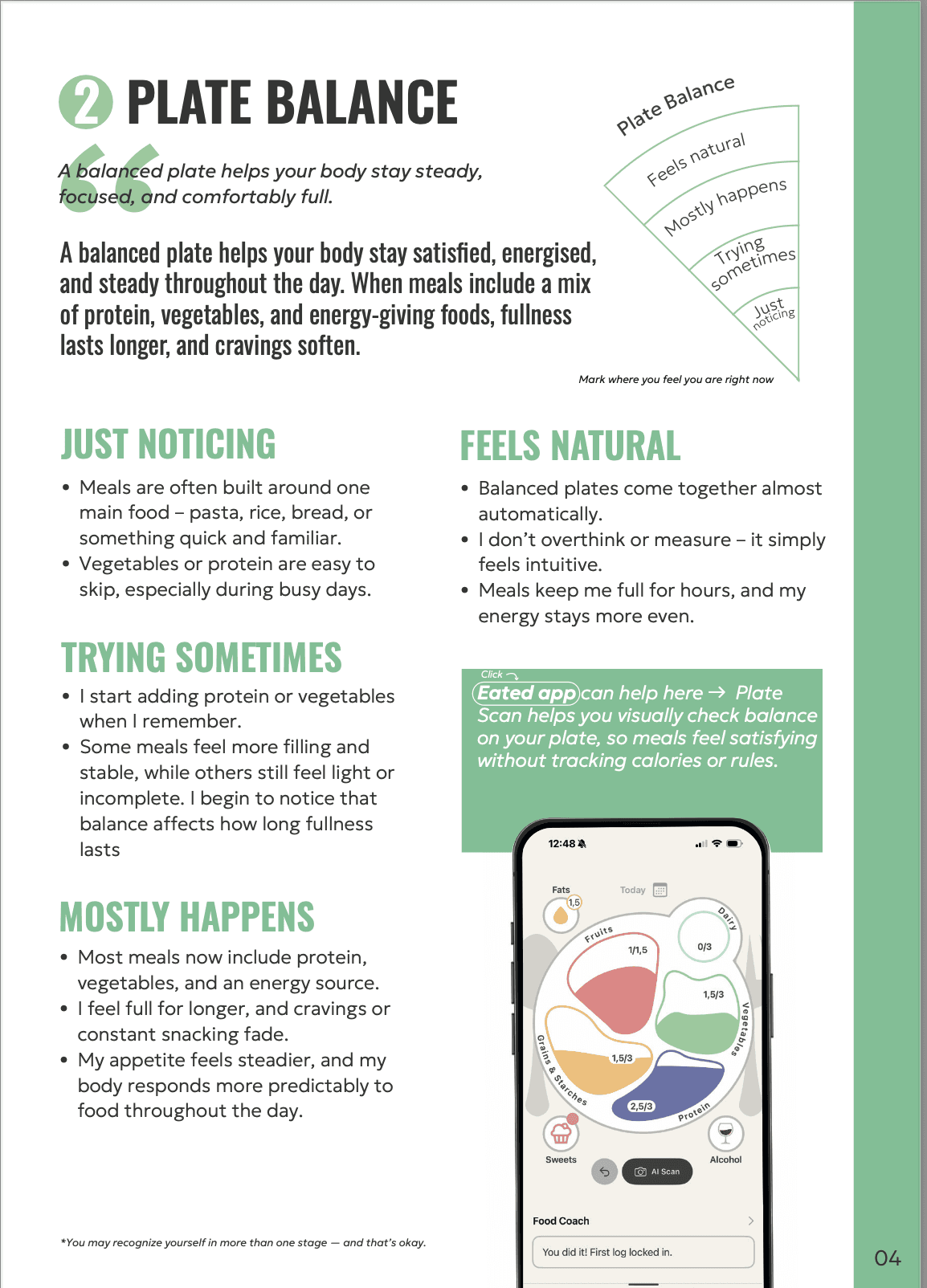
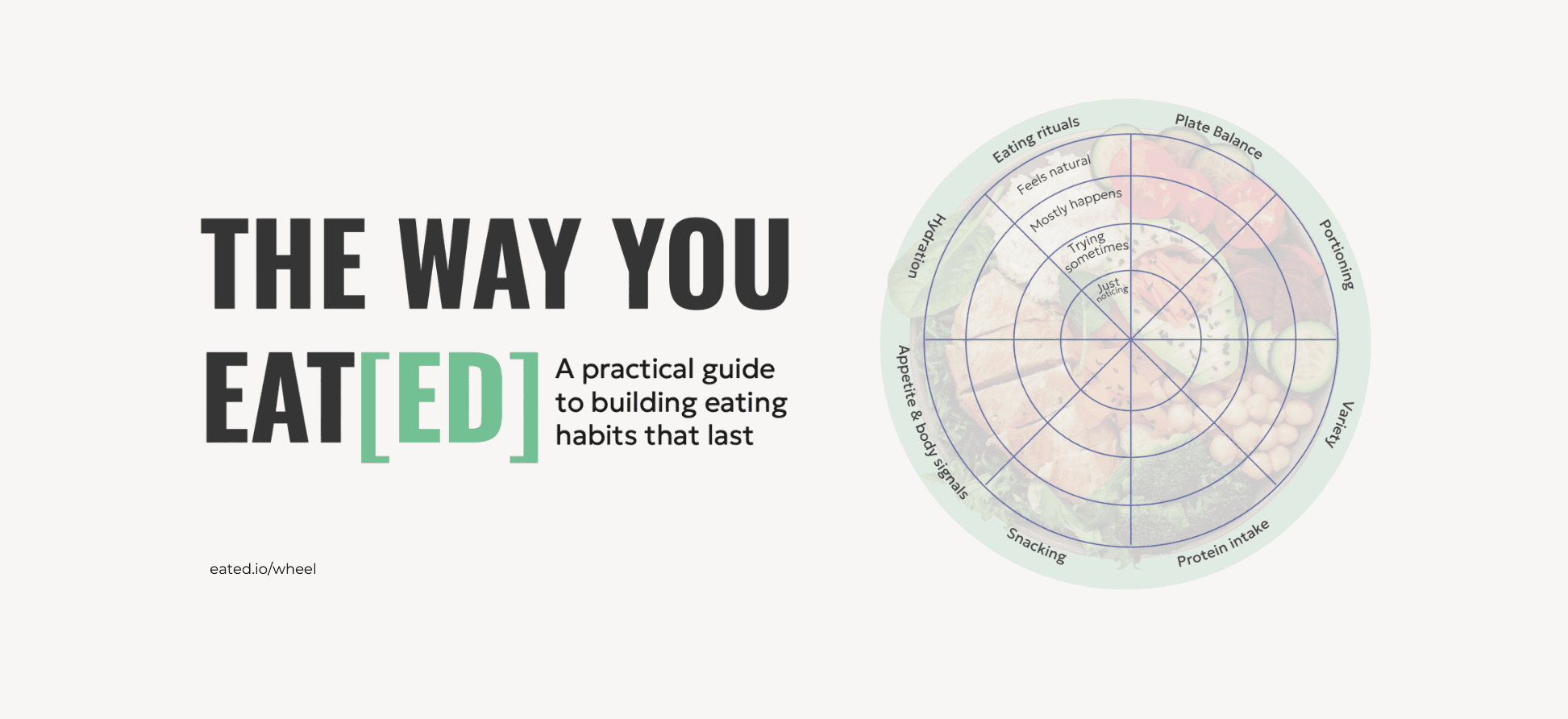
To respond to this, Eated has introduced the Habit Wheel – a reflective framework designed to help people build healthier eating habits beyond short-term commitments. The framework is built using the Harvard Plate method, incorporates behavioral aspects of eating habits, and draws on more than 5,000 hours of hands-on practice by a certified nutritionist.
Rather than focusing on strict rules or restrictions, the Habit Wheel encourages people to look at how they eat today and choose small, realistic changes that feel supportive rather than overwhelming.
“We want to help people build lasting habits not because people quit soon after committing, but because quitting is a signal that the system itself doesn’t work. You can’t count calories your entire life or go to the gym every single day, no matter what,” added Irene Astaficheva. “That idea was at the core from the very beginning. We don’t want to be another voice saying ‘eat more protein,’ ‘drink more water,’ or ‘eat more veggies.’ We want to show what this can actually look like in real life – for a real person. We created the free Habit Wheel framework to help people understand where they are today with their habits, and what actually makes sense for them to change, rather than following one-size-fits-all rules.”
The Habit Wheel focuses on eight everyday eating habits, including meal balance, portioning without scales, protein intake, snacking, hydration, food variety, appetite and body signals, and eating rituals.
How does it work? Users are invited to reflect on each habit, mark where they feel they are now, from “just noticing” to “feels natural”, and select one or two habits to focus on.
The Habit Wheel is available at no cost and can be downloaded here.