There’s no time of year that we wouldn’t like to eat some cheese. Delicious, fresh, at the core of many American recipes… Cheese is, gracefully, the best thing in the world.
You’ve probably also heard that cheese is the biggest weight loss enemy.
We disagree. Cheese can be your weight-loss ally—when consumed mindfully and in moderation.
Why? First off, recent research suggests that cheese in moderate amounts may help with weight loss. There’s no need to eliminate mozzarella from your grocery list even if it doesn't actively speed up the process.
Let’s dive deeper into what cheeses you should eat for weight loss, which aren’t, and why.
5 Best Cheeses for Weight Loss (According to Science)
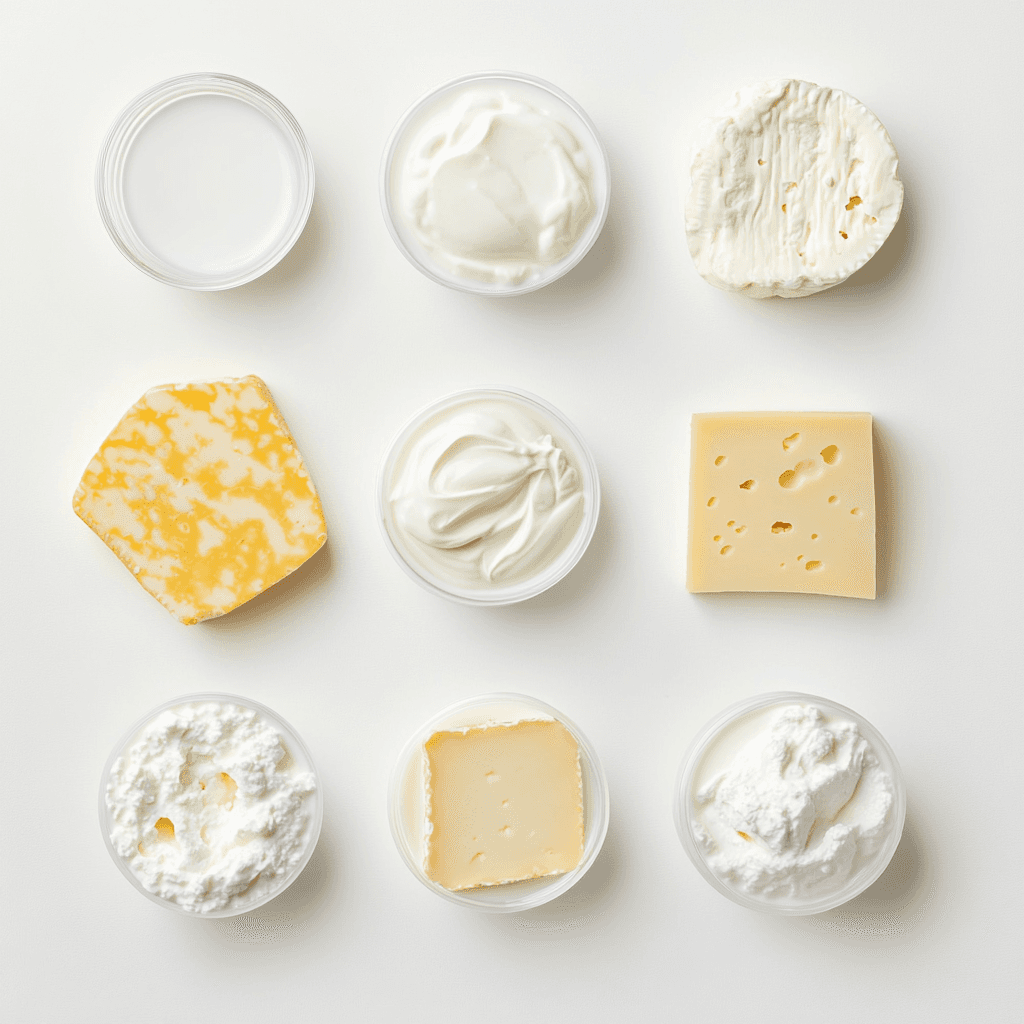
We couldn’t list every cheese for weight loss, but here are 5 cheeses with the best protein-to-fat ratio: cottage cheese, parmesan, goat cheese, feta, and ricotta. Yogurt-based cheeses like labneh are also excellent choices.
There are three main questions we'd ask before choosing one cheese over another to support your weight loss goals:
Is this cheese high in protein?
Will it keep me full?
Do I genuinely enjoy eating it?
While it’s important to consider protein intake and healthy fats, eating what you love is no less important for lasting change.
What About Processed Cheeses?
Processed cheeses, labeled as pasteurized process cheese, typically have more preservatives and artificial coloring, and may be lower in protein than natural cheese. They may not be as filling too, making artificial cheese a less sustainable choice for weight loss.
That said, nutrition varies brand by brand — some processed cheeses are closer in protein and fat profile to natural ones, while others are mostly starches and oils.
Does it mean you can’t eat it? Definitely not! Enjoy any food you like, but keep in mind that natural cheese often offers more nutritional value.
Can I Lose More Weight with Non-Dairy Cheese?
If you’re among 39% of Americans trying to include more plant-based food, according to the recent NielsenIQ Homescan survey, you may think that non-dairy cheeses are automatically a healthier choice. Sometimes they are, but it depends on the specific product.
Both vegan cheeses and natural cheeses can fit into a healthy diet. Plant-based options may contain more fiber and lower your intake of cholesterol. It’s important to check the ingredients. For example, some non-dairy cheese may be high in palm oil which can affect their nutrition scores.
Cheese and the Healthy Plate Method
The healthy plate method is an effective and simple way to know how much cheese is enough for healthy nutrition.
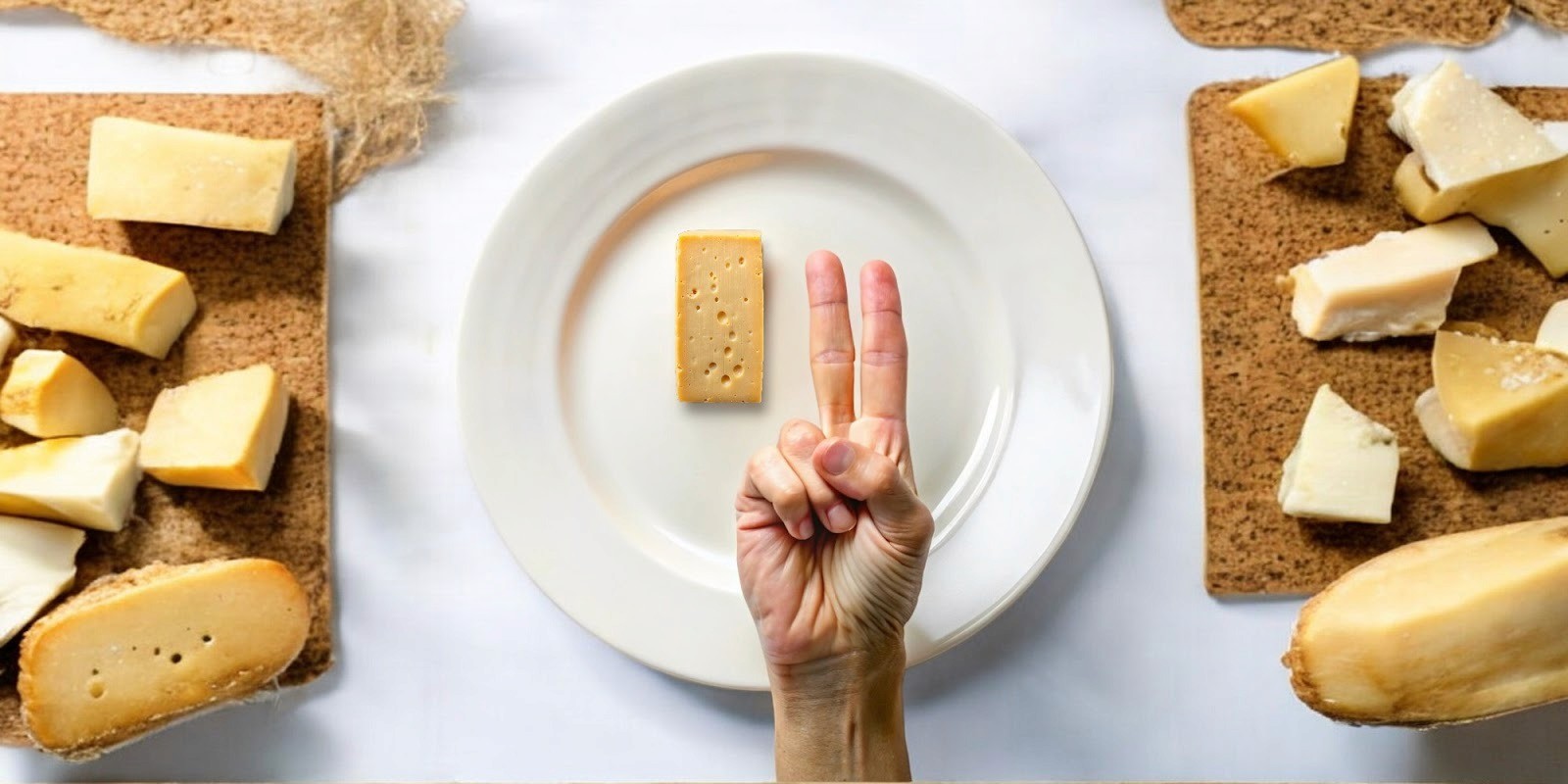
It’s totally fine to eat more, but if you’re trying to lose weight without saying no to mozzarella, about two fingers’ worth of cheese is usually enough.
This method is based on the Harvard balance plate. For some people, it works better than counting calories or living on a constant deficit. And no—no need to decline that burrata on your pasta forever!
The Science Behind Why Cheese Feels So Rewarding
Is giving up on cheese really hard on you? You’re not alone. It actually has a scientific explanation why it’s so hard for humans to say no to a parmesan on top of… everything.
Cheese naturally contains a protein called casein, which breaks down into casomorphins, which partly explains why a piece of cheese feels so rewarding. Research shows that these peptides can interact with opioid receptors in the brain — not in a way that creates addiction, but to make food feel comforting and rewarding.
On top of that, cheese is salty, fatty, and tasty—everything our body likes. So, instead of cutting it off completely, focusing on portion size may be a more realistic way to enjoy it without overeating.
Eat Cheese, Please
As Harvard Health puts it: “Eat cheese, if you please”. We couldn’t agree more.
If cheese is something you genuinely love and consciously enjoy, there is no reason to cut it out completely.
The more we restrict something we crave, the more likely we are to get back to our old eating habits. If your weight loss goals are about long-term shifts, and a strategic piece of mozzarella makes it easier to maintain, well… We say—eat cheese, please.