The Harvard Plate Method is an evidence-based guide to building a balanced meal, developed by nutrition scientists at Harvard T.H. Chan School of Public Health in 2011. It divides a plate into four sections — half vegetables and fruits, one quarter whole grains, one quarter healthy protein — with guidance on fats and drinks on the side. No weighing. No calorie targets. Just visual proportion as a practical framework for eating well consistently.
It is currently one of the most cited dietary frameworks in nutrition research, and the foundation of how Eated approaches food logging and habit building.
Where the Harvard Plate Method Comes From
In 2011, nutrition experts at Harvard T.H. Chan School of Public Health created the Healthy Eating Plate as a direct response to the USDA's MyPlate — the US government's official dietary guide. Their core objection: MyPlate was shaped by political and agricultural industry pressures as much as nutritional science, and its recommendations on dairy, grains, and protein were too vague to be practically useful.
Harvard's version was built purely on the available nutritional evidence, with no obligation to any food industry or government department. It drew on decades of research into chronic disease prevention — cardiovascular disease, type 2 diabetes, certain cancers — and translated that research into something a person could apply at every meal without a nutrition degree.
The result is a framework that has since been adopted or referenced by health institutions in Spain, Peru, Thailand, and dozens of other countries, and remains one of the most frequently cited dietary tools in peer-reviewed nutritional research.
"What I find most valuable about the Harvard Plate in my coaching practice is that it gives people a mental model rather than a set of rules. Once someone genuinely understands what a balanced plate looks like, they can apply it anywhere — at a restaurant, at a family dinner, traveling. You don't need an app open to count anything. The pattern becomes intuitive over time." — Irene Astaficheva, certified nutritionist, co-founder of Eated
How the Harvard Plate Method Works — The Four Sections
The Harvard Plate is built around visual proportion, not measurement. Here is what each section contains and why.
Half Your Plate — Vegetables and Fruits
The largest portion of the plate — roughly 50% — goes to vegetables and fruits, with an emphasis on vegetables. Harvard recommends aiming for color and variety, because different colors in vegetables signal different phytonutrients and micronutrients.
One important clarification that surprises many people: potatoes do not count as vegetables in this framework. Potatoes behave metabolically like refined carbohydrates — they spike blood sugar rapidly — and belong in the grains section if used at all. This distinction is one of the clearest differences between Harvard's guidance and more generic "eat your vegetables" advice.
Fruits are included in this half, but the emphasis is on whole fruits rather than juice. Juice removes the fiber that slows sugar absorption, making it nutritionally closer to a sweetened drink than a whole fruit.
One Quarter — Whole Grains
A quarter of the plate goes to grains — but specifically whole grains: brown rice, quinoa, whole wheat pasta, oats, barley, whole wheat bread. Not refined grains.
The distinction matters because refined grains (white rice, white bread, standard pasta) are stripped of fiber and nutrients during processing. They digest quickly, spike blood sugar, and leave you hungry sooner. Whole grains digest more slowly, sustain energy for longer, and deliver vitamins, minerals, and fiber that refined versions don't.
Harvard is explicit here where MyPlate is not — "whole grains" is not interchangeable with "grains."
One Quarter — Healthy Protein
The remaining quarter goes to protein — fish, poultry, beans, lentils, nuts, eggs. Harvard specifically recommends limiting red meat and avoiding processed meats (bacon, sausage, deli meats) based on the evidence linking them to cardiovascular disease and colorectal cancer risk.
This is where the Harvard Plate diverges most significantly from standard Western eating patterns, where red meat often dominates the protein quarter. The framework doesn't prohibit red meat — it asks you to treat it as occasional rather than default.
Legumes (beans, lentils, chickpeas) occupy an interesting position — they count as protein here, but also deliver fiber and carbohydrate, making them nutritionally versatile and particularly useful for plant-based eaters.
Healthy Oils and Drinks on the Side
Outside the plate itself, Harvard's framework addresses two things most dietary guides ignore or get wrong.
Fats: Use healthy plant-based oils — olive oil, canola oil, avocado oil — in cooking and at the table. Avoid partially hydrogenated oils (trans fats). The framework explicitly does not recommend low-fat eating, which was a dominant but now largely discredited dietary recommendation of the 1980s and 90s.
Drinks: Water, coffee, and tea are the recommended defaults. Milk is limited to one or two servings daily (a significant departure from USDA guidance, which historically recommended three). Sugary drinks — including juice — are treated as the exception, not the norm.
Harvard Plate vs. MyPlate — What's the Difference
Both use a divided plate as the visual format, but they diverge meaningfully on several key recommendations.
Category | Harvard Healthy Eating Plate | USDA MyPlate |
|---|---|---|
Grains | Specifically whole grains | "Make half your grains whole" — refined grains acceptable |
Vegetables | Potatoes excluded | Potatoes count as vegetables |
Protein | Limits red meat, excludes processed meat | No specific protein quality guidance |
Dairy | Limited to 1-2 servings/day, optional | Dedicated plate section, 3 servings recommended |
Fats | Healthy oils recommended, low-fat not endorsed | Limited guidance on fat type |
Drinks | Water primary, sugary drinks discouraged | Limited guidance |
Evidence basis | Independent academic research | Subject to USDA and industry input |
The practical implication: MyPlate tells you roughly what categories to eat. Harvard's plate tells you what quality within those categories — and that specificity is what makes it actionable for long-term health rather than just short-term compliance.
What the Harvard Plate Method Looks Like in Real Life
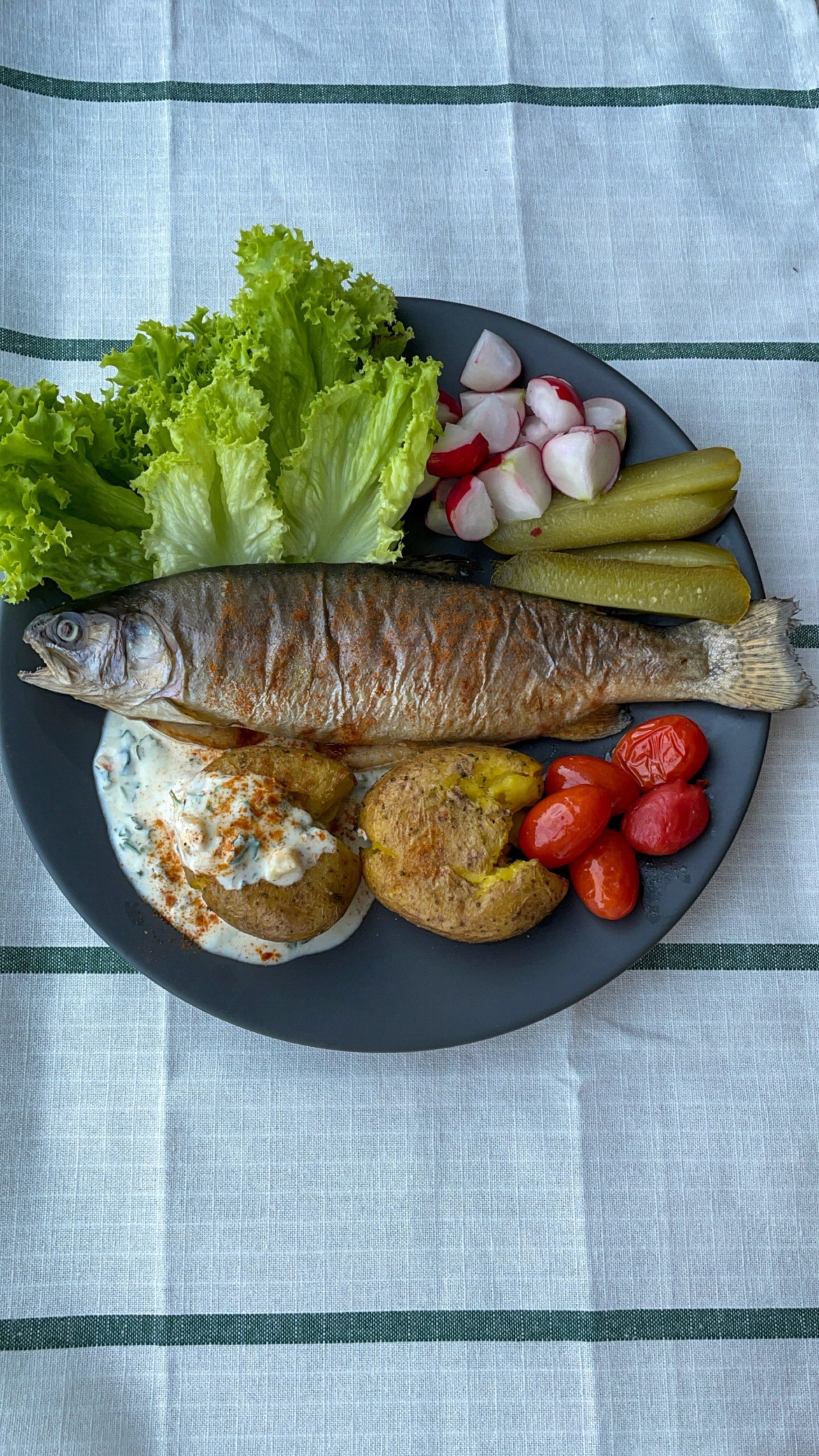
The framework sounds straightforward in theory. Here is what it looks like applied to three real meals — not diet food, real food.
Breakfast Half the plate: spinach sautéed in olive oil with cherry tomatoes, plus a handful of blueberries. One quarter: one slice of whole grain sourdough toast. One quarter: two scrambled eggs. Drink: black coffee or tea. This is a complete, satisfying breakfast that takes 10 minutes and requires no measurement.
Lunch Half the plate: a large mixed salad with cucumber, bell pepper, and roasted vegetables. One quarter: a portion of brown rice or quinoa. One quarter: grilled salmon or a scoop of chickpeas. Dressing: olive oil and lemon. This scales easily to a restaurant meal — order a protein, ask for the grain side, fill the rest visually with whatever vegetable options exist.
Dinner Half the plate: roasted broccoli, carrots, and zucchini. One quarter: whole wheat pasta or baked sweet potato. One quarter: chicken thigh, lentil stew, or baked fish. This is a normal family dinner — nothing exotic, nothing that requires a separate meal for the rest of the household.
The pattern across all three: vegetables take up the most space, grains and protein are roughly equal smaller portions, and no calorie counting happens at any stage.
Common Mistakes When Using the Harvard Plate Method
After working with clients applying this framework for years, these are the errors that come up most consistently.
Treating it as a calorie restriction tool. The Harvard Plate is about composition, not quantity. Some people apply it and then also try to keep portions very small, which defeats the purpose. The framework is designed to let appropriate satiety regulate quantity naturally over time — that only works if you're eating enough.
Counting potatoes as vegetables. This one comes up constantly. Roast potatoes, mashed potatoes, baked potatoes — they belong in the grain quarter if you're using them, not the vegetable half. Fill the vegetable half with non-starchy vegetables instead.
Treating all protein as equal. A quarter plate of processed deli meat is not the same as a quarter plate of lentils or grilled fish. The framework specifies quality, not just category. If most of your protein quarter is coming from red or processed meat most days, you're applying the format but not the substance.
Ignoring the drink guidance. The Harvard Plate's recommendations on drinks — particularly limiting juice and sugary drinks — are as evidence-based as the food guidance. Many people clean up their plates but continue drinking calories in ways that undermine the overall pattern.
Applying it rigidly to every single meal. The framework is a guide, not a law. One meal that doesn't follow the pattern doesn't undo anything. The goal is consistency across most meals over time, not perfection at every sitting. Clients who treat it as an absolute rule tend to abandon it faster than those who treat it as a default.
How the Harvard Plate Method Compares to Calorie Counting
The fundamental difference is what you're tracking. Calorie counting measures quantity. The Harvard Plate Method focuses on composition — the quality and proportion of what you eat, not the total energy value.
Research consistently shows that composition-based approaches produce better long-term adherence than calorie restriction, because they don't require sustained cognitive effort and don't trigger the metabolic adaptation response that calorie deficits produce. You're building a pattern, not managing a budget.
For a detailed breakdown of why calorie counting specifically fails for most people, see our post on why calorie counting doesn't work.
Frequently Asked Questions
What is the Harvard Plate Method?
The Harvard Plate Method is a visual guide to building balanced meals, developed by Harvard T.H. Chan School of Public Health in 2011. It divides a plate into half vegetables and fruits, one quarter whole grains, and one quarter healthy protein, with guidance on healthy fats and drinks. It is designed as a practical, calorie-free framework for consistent healthy eating.
Is the Harvard Plate Method good for weight loss?
The Harvard Plate Method is designed for long-term health rather than rapid weight loss. However, because it naturally increases vegetable and fiber intake while reducing refined grains, processed foods, and sugary drinks, many people experience gradual weight normalization when following it consistently. It works by improving eating patterns rather than creating a calorie deficit.
How is the Harvard Plate different from MyPlate?
The key differences are specificity and independence. Harvard's plate specifies whole grains (not just any grains), excludes potatoes from the vegetable category, limits red and processed meat, reduces dairy recommendations, and endorses healthy fats — all based on independent academic research. MyPlate, developed by the USDA, has historically been influenced by agricultural industry input and is less specific on food quality within categories.
Can you use the Harvard Plate Method without counting calories?
Yes — that is the entire point of the framework. The Harvard Plate Method replaces calorie counting with visual proportion. If half your plate is vegetables and fruits, a quarter is whole grains, and a quarter is healthy protein, you have a nutritionally complete meal without any calculation required.
What foods are not recommended on the Harvard Plate?
The Harvard Plate specifically limits or excludes: potatoes (from the vegetable section), refined grains (white rice, white bread, standard pasta), processed meats (bacon, sausage, deli meats), sugary drinks including juice, and partially hydrogenated oils. Red meat is not excluded but is recommended as occasional rather than daily.
The Bottom Line
The Harvard Plate Method is the most practical, evidence-backed framework for building balanced meals that exists — and it requires no counting, no weighing, and no app to execute. Half vegetables and fruits, one quarter whole grains, one quarter healthy protein, healthy fats on the side, water as the default drink. Applied consistently across most meals, it is enough.
At Eated, we built our plate scanning feature directly around this method — when you photograph a meal, the app evaluates balance using Harvard Plate proportions, not calorie totals. If you want to start applying the framework today, the Eated Habit Wheel is a free tool that helps you identify which eating habits to build first.