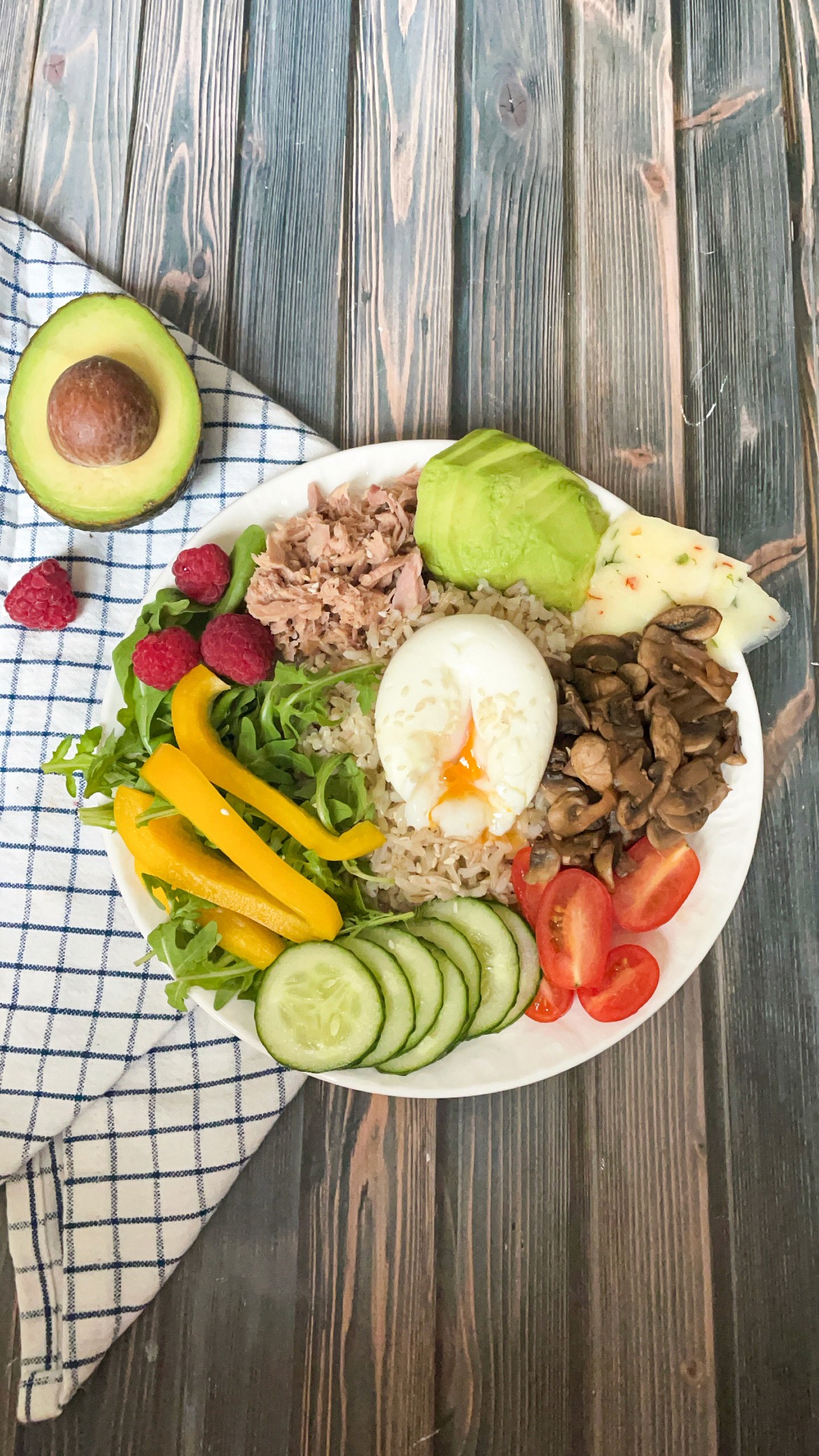
The Harvard Plate Method is a universal framework — it doesn't come with a women's version. Half vegetables and fruits, a quarter whole grains, a quarter healthy protein, healthy fats on the side. That structure applies to everyone.
But applying it well for women requires understanding the nutritional contexts that generic dietary guidance tends to overlook: iron losses from menstruation, calcium needs across decades of hormonal change, protein requirements that shift with life stage, and the specific ways that chronic restriction — so common in women's dietary history — disrupts the body's ability to use the framework as intended.
This post doesn't rewrite the Harvard Plate. It explains how to apply it accurately given the specific nutritional realities of a female body across different life stages.
Why Women's Nutritional Needs Differ From the Generic Guidelines
Most nutritional research has historically been conducted on male subjects, with findings applied broadly to women as well. This is changing — but the gap means that some generic nutritional guidance doesn't fully account for what women's bodies actually need.
Three areas where the difference is most practically significant:
Iron. Menstruating women lose iron with each cycle — and iron deficiency is among the most common nutritional deficiencies in women of reproductive age worldwide. The generic Harvard Plate guidance on protein — limiting red meat, emphasizing plant proteins, fish, and poultry — is sound for long-term health but doesn't explicitly account for the iron gap this creates for menstruating women. Applying the plate well means understanding which protein sources and which vegetables best support iron status.
Calcium and bone density. Women have a higher lifetime risk of osteoporosis than men, partly due to the role estrogen plays in bone maintenance and the significant bone density loss that accelerates after menopause. Calcium intake across all adult decades matters — not just in older age — because bone mass peaks in the late twenties and early thirties. The Harvard Plate's reduced dairy recommendation (one to two servings daily, versus the USDA's historical three) requires that non-dairy calcium sources are actively included elsewhere on the plate.
Hormonal fluctuations across the cycle and life stages. Estrogen and progesterone affect metabolism, appetite, food preferences, and energy requirements in ways that vary not just between women but within the same woman across the month and across decades. These fluctuations don't require a completely different eating approach, but they do affect how the Harvard Plate framework feels to apply — and understanding them prevents unnecessary confusion about appetite and food cravings.
"The Harvard Plate is the right foundation for almost everyone. What I find in my coaching practice is that women often apply it through the lens of restriction — eating less, keeping portions small, avoiding foods they've been told are fattening. That lens undermines the framework entirely. The plate method works when you're using it to eat well, not to eat less." — Irene Astaficheva, certified nutritionist, co-founder of Eated
Iron: The Most Common Nutritional Gap in Menstruating Women
Iron deficiency is the most widespread nutritional deficiency globally, and menstruating women are disproportionately affected. Monthly blood loss represents a significant iron expenditure that dietary intake needs to compensate for consistently.
The Harvard Plate's protein quarter is where iron comes into the picture. The framework specifically recommends limiting red meat — sound advice for cardiovascular health — but red meat (particularly beef and lamb) provides heme iron, the form most efficiently absorbed by the body. Plant-based iron sources (legumes, spinach, tofu, seeds) provide non-heme iron, which is absorbed significantly less efficiently.
What this means in practice for the protein quarter:
Including red meat one to two times per week — rather than eliminating it entirely — provides a reliable source of heme iron without the frequency that research links to cardiovascular risk. This is not a contradiction of Harvard's guidance but an application of it: "limit" is not the same as "eliminate."
For women who don't eat red meat, the protein quarter and the vegetable half both need to be chosen with iron content in mind. Legumes (lentils, chickpeas, black beans), tofu, pumpkin seeds, and dark leafy greens are the highest non-heme iron sources. Pairing them with vitamin C-rich foods — bell peppers, tomatoes, citrus, strawberries — significantly increases non-heme iron absorption.
One practical way to think about this: if the vegetable half of the plate includes spinach, kale, or broccoli (all iron-containing), and the protein quarter includes legumes or lean red meat, and the meal includes a vitamin C source — the plate is actively supporting iron status rather than simply meeting caloric needs.
What depletes iron absorption:
Calcium and iron compete for absorption when consumed simultaneously. Large amounts of dairy alongside iron-rich foods can reduce iron uptake. This doesn't mean avoiding dairy — it means not exclusively combining them in the same meal. Coffee and tea also inhibit non-heme iron absorption; consuming them between meals rather than with iron-rich meals improves absorption.
Calcium: Applying the Harvard Plate Across Decades
Harvard's plate recommends limiting dairy to one to two servings per day — a meaningful reduction from the USDA's historical three-serving recommendation. The reasoning is sound: the evidence linking high dairy intake to reduced chronic disease risk is weaker than commonly assumed, and dairy's saturated fat content is a consideration.
But this creates a practical question for women: where does calcium come from if not primarily from dairy?
The answer is already embedded in the Harvard Plate framework — it just requires applying it intentionally. The vegetable half of the plate is where non-dairy calcium lives.
Calcium-rich vegetables and foods for the vegetable half:
Bok choy, kale, broccoli, and Chinese cabbage: all provide calcium in forms with relatively high bioavailability
Fortified plant milks (if used as a dairy alternative)
White beans, edamame, and tofu (particularly calcium-set tofu)
Almonds and sesame seeds (tahini)
One to two servings of dairy per day combined with a vegetable half that regularly includes calcium-rich greens and legumes meets calcium needs for most women. The key is that the vegetable half can't be nutritionally passive — it needs to be chosen with some awareness of what it's providing.
Calcium and life stage:
Calcium needs are relatively consistent across adult life at approximately 1,000mg daily for women under 50, increasing to 1,200mg after menopause as bone turnover accelerates. The practical implication is that post-menopausal women applying the Harvard Plate should be more deliberate about calcium-rich vegetable and protein choices — not eating a different plate, but making more intentional choices within the same structure.
Vitamin D is essential for calcium absorption and is not adequately obtained through food alone for most people regardless of how well-constructed the plate is. This is one area where supplementation is often warranted — worth discussing with a healthcare provider rather than relying on diet alone.
Protein: How Much, and Why It Matters More Than Many Women Think
The Harvard Plate's protein quarter is designed for quality rather than quantity — emphasizing fish, poultry, legumes, and nuts over red and processed meat. For women, protein adequacy deserves attention beyond quality.
Women's protein needs vary significantly with life stage:
Reproductive years: General guidance of 0.8g per kilogram of body weight applies, but this is a minimum, not an optimal target. Women who are physically active, under significant stress, or not eating particularly varied diets often benefit from closer to 1.2-1.6g per kilogram. The protein quarter of the plate, applied consistently, typically delivers this — the issue is when the protein quarter gets deprioritized in favor of a larger vegetable half in the name of "eating less."
Pregnancy and breastfeeding: Protein requirements increase substantially. The protein quarter of the plate remains the right structural approach — but the overall plate may need to be larger, and protein sources more consistently animal-based or specifically combined to ensure all essential amino acids are present.
Perimenopause and menopause: Estrogen plays a role in muscle protein synthesis. As estrogen declines during perimenopause, muscle mass becomes harder to maintain without adequate protein and resistance training. Research suggests that protein needs may be higher in this life stage — closer to 1.2-1.6g per kilogram — to preserve lean mass and support metabolic health. The protein quarter of the plate needs to be taken seriously, not treated as an afterthought to the vegetable half.
The Hormonal Cycle and What It Does to Appetite
One of the most practically useful things to understand about applying the Harvard Plate as a woman is that appetite, food cravings, and energy needs genuinely fluctuate across the menstrual cycle — and this is physiologically normal, not a failure of discipline.
Follicular phase (days 1-14, from menstruation to ovulation): Estrogen rises. Appetite tends to be relatively stable, and many women feel more energized and less preoccupied with food during this phase.
Luteal phase (days 15-28, from ovulation to menstruation): Progesterone rises. Appetite typically increases — research consistently finds higher caloric intake in the luteal phase across populations. Cravings for carbohydrate-rich and calorie-dense foods are common and have a physiological basis: progesterone increases metabolic rate slightly, and the body genuinely requires more energy.
What this means for the Harvard Plate: the framework doesn't change across phases, but the plate may naturally be larger in the luteal phase — and fighting that appetite increase with restriction tends to produce stronger cravings, not fewer. Applying the Harvard Plate structure generously in the luteal phase (a full half plate of vegetables, a proper quarter of whole grains, adequate protein) is more sustainable than restricting and producing the binge-restrict cycle that calorie-tracking during PMS often creates.
The Restriction Problem: Why Women Often Under-Apply the Harvard Plate
This is the most important practical point in this entire post.
Women have higher rates of dietary restriction history than men — decades of diet culture, calorie counting, and the internalized belief that eating less is inherently virtuous. When women learn the Harvard Plate Method, many apply it through a restriction lens: making the vegetable half overwhelming and the protein and grain quarters very small, using the plate as a tool to eat less rather than to eat well.
This misapplication has real consequences. Undereating protein impairs muscle maintenance, immune function, and hormonal production. Undereating whole grains reduces fiber and B vitamin intake. Undereating overall disrupts the hunger and satiety signals that the plate method is designed to support.
The Harvard Plate works when applied at an appropriate, satisfying volume. A plate that leaves you hungry 90 minutes later is not a correctly applied Harvard Plate — it's a restriction diet wearing the plate method's structure.
As we've covered in the intuitive eating guide, rebuilding trust with hunger signals is often necessary before any eating framework can function as intended. The plate method and intuitive eating are complementary — the plate provides compositional structure, intuitive eating provides the attunement to quantity.
A Practical Summary: The Harvard Plate Applied for Women
The vegetable half: Choose with iron and calcium in mind — dark leafy greens (spinach, kale, bok choy, broccoli) regularly, alongside a variety of colorful vegetables. Include vitamin C sources (bell peppers, tomatoes, citrus) frequently to support non-heme iron absorption.
The protein quarter: Prioritize quality: fish two or more times per week, legumes regularly, poultry, eggs, and nuts. Include lean red meat one to two times per week during menstruating years to support iron status. Don't make this quarter smaller than intended in the name of reducing calories — protein supports muscle, hormonal function, and satiety.
The grain quarter: Whole grains consistently: brown rice, quinoa, whole wheat pasta, oats, barley. These provide B vitamins (including folate, which is particularly important in reproductive years), fiber, and sustained energy. Don't eliminate this quarter — it's the sustained-energy quarter.
Healthy fats: Olive oil, avocado, nuts, and seeds. Omega-3 fatty acids from fatty fish and flaxseeds have particular relevance for women — evidence suggests benefits for inflammation, menstrual symptoms, and cardiovascular health.
Dairy: One to two servings per day within the overall structure — yogurt, milk, cheese — as a calcium and protein source. Not the primary calcium strategy, but a useful contributor.
Frequently Asked Questions
Is the Harvard Plate Method different for women?
The structure is the same — half vegetables and fruits, a quarter whole grains, a quarter healthy protein, healthy fats on the side. What differs is how women should apply it given specific nutritional considerations: prioritizing iron-rich protein and vitamin C-rich vegetables for menstruating women, being deliberate about calcium sources given the reduced dairy recommendation, ensuring adequate protein at all life stages, and not applying the framework through a restriction lens.
How do I get enough iron on the Harvard Plate without eating a lot of red meat?
Include iron-rich plant foods regularly in your vegetable half and protein quarter: lentils, chickpeas, black beans, tofu, spinach, kale, pumpkin seeds. Pair them with vitamin C-rich foods at the same meal to maximize absorption. Include lean red meat one to two times per week if you eat meat. Avoid consuming large amounts of calcium and coffee at the same time as iron-rich foods.
Does the Harvard Plate account for hormonal changes during the menstrual cycle?
Not specifically — it's a universal framework. What matters practically is not fighting the increased appetite in the luteal phase with restriction. Applying the plate structure generously and eating to satiety throughout the cycle is more effective than restricting in response to premenstrual cravings.
How does protein need change during perimenopause?
Protein needs increase as estrogen declines, because estrogen supports muscle protein synthesis. Research suggests aiming for 1.2-1.6g of protein per kilogram of body weight during perimenopause and menopause to support lean mass and metabolic health. The protein quarter of the Harvard Plate applied consistently and generously should deliver this — but this is one life stage where being deliberate about protein sources matters more than average.
Is the Harvard Plate appropriate during pregnancy?
The compositional structure is appropriate, but quantity and specific nutrient focus change significantly. Folate (from leafy greens, legumes, and fortified grains), iron, calcium, and protein all have increased requirements during pregnancy, and overall energy needs are higher. Applying the Harvard Plate structure at higher volumes and with deliberate attention to these nutrients is appropriate, alongside guidance from a healthcare provider.
The Bottom Line
The Harvard Plate Method is one of the most practical, evidence-based frameworks for healthy eating available — and it works well for women across life stages when applied with an understanding of what women's bodies specifically need.
The structural principle stays the same. The application gets more intentional: iron-supporting food pairings, deliberate calcium sources, adequate protein at every stage, and a generous — not restricted — application of the framework overall.
If you want to build these habits one at a time, the free Habit Wheel is a five-minute tool to identify where to start. Or download Eated on the App Store and begin your first 8-day habit program today.