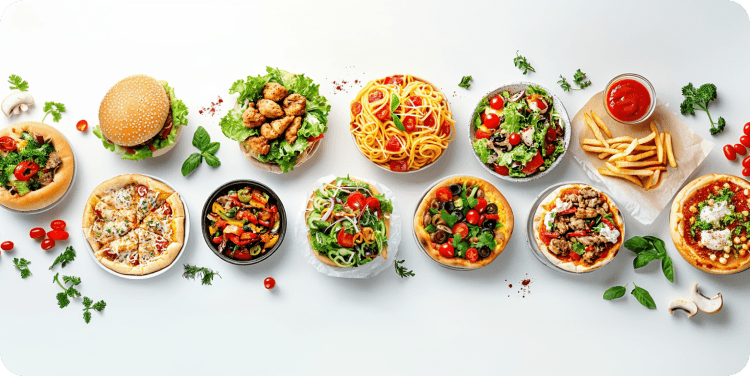
Reconnecting with your body through mindfulness practices and healthy relationships with food – that’s what intuitive eating is all about. This approach focuses on nutritional rituals that improve your well-being and overall life quality.
But intuitive eating is not a diet. In fact, it rejects the diet mentality in favor of building trusting, kind, and accepting relationships with your body.
Can intuitive eating help with weight loss?
It can support maintaining a healthy weight in ways most diets cannot. Still, intuitive eating is as far from traditional dieting as you can get. Keep reading to learn more about this method.
What Is Intuitive Eating?
Intuitive eating is not a diet plan. It’s an approach that focuses on your well-being and healthy relationship with food. In short, you choose what is best for you, eat when you are hungry, and stop eating when you are full. You focus on your internal cues, not emotions or external pressure.
Intuitive eating helps you tell the difference between biological hunger and emotional hunger triggered by stress.
Intuitive eating was first introduced in 1995 by registered dietitians Evelyn Tribole and Elyse Resch. Their book focuses on non-diet principles and general self-love.
Telling You Why Dieting Doesn’t Work
Diets tend to be successful for quick weight loss, but can you keep up with results? Most diets only work as long as you’re following all the rules and restrictions.
That’s exactly why dieting doesn’t work.
You may regain weight quickly after ending your diet. Not a desirable result after months of restrictions. Millions of Americans report gaining all the weight back after returning to normal lifestyle, excluding some diets like the Mediterranean diet.
Diet mentality works against us. Ignoring your body’s signals can trigger increased hunger, naturally. Continuous deficits are associated with hormonal imbalance. Ghrelin and leptin, two key hormones responsible for your appetite, may not function properly and activate increased food cravings.
You can relearn how to trust your body, understand its signals, and support healthy weight management without continuous stress. – Irene Astaficheva
9 Ways to Practice Intuitive Eating
Break Up with Diet Culture
It’s time to say goodbye to the diet mentality. Diets usually have short-term results – and extreme diets can negatively impact your mental health and physical well-being. Intuitive eating is a self-love guide to healing relationships with food. It is a non-diet approach that may help you build peaceful and trustful relationships with food and yourself.
No Food Is Bad
A healthy mindset for eating starts when you accept that there is no good or bad food. All food is just food. Unless you have any specific dietary restrictions, there’s no pressure to avoid foods you enjoy, even chocolates or chips. It’s called All Foods Fit Model which focuses on natural awareness of your food's judgements.
Accepting that food is food may be life-changing.
Guilt Is Not an Ingredient
It’s time to stop making guilt an ingredient. Diet culture teaches us to focus on guilt rather than on health and well-being. While food is meant to bring joy and connection, diets do the exact opposite.
Have you ever felt guilty for eating a few extra calories? There is even weight-related guilt which suggests that guilt is linked to weight gain. Not what you want from your diet?
Find The Satisfaction Factor
A core intuitive eating principle, the Satisfaction Factor, is simple – food should bring you pleasure and satisfaction since fueling your body isn’t its only function. It’s the sixth principle of Intuitive Eating.
Follow this set of rules: eat what you want, when you want to eat that, in a healthy space. It helps to experience true satisfaction from your meals, maybe for the first time.
Know When It Is Emotional Hunger
There are two types of hunger – emotional and physiological. A good question to ask: are you truly hungry, or coping with emotions?
Emotional eating is a very common coping mechanism among Americans. It is neither healthy nor good for your mental and physical well-being. Learning to differentiate between these two types of hunger—emotional or physiological—can change your relationships with food.
Cope with Emotional Eating with Kindness
If emotional eating is your pattern, you’re not alone. The National Institutes of Health report that women on the younger side have a tendency for emotional eating more often than other social groups. That means that when you find yourself in front of an open fridge at night, chances are another person does the same.
The best way to cope with emotional eating is with kindness and understanding. It’s a behavioral pattern you can work on and change.
Respect Your Body Signals
Respecting your body’s signals is the key to adopting intuitive eating. Did you know, for example, that dehydration is directly linked to anxiety and depression? Or that you learn to ignore your body’s signals at a very young age if you grew up in an unhealthy environment.
Intuitive eating supports the idea of learning to listen to your body and respecting its wants and needs.
Mindful Appreciation of Food
Intuitive nutrition means trusting yourself with what and how much to eat and appreciating food better. Can you stop for a minute and take a look at your meal? What do you notice?
Appreciating your food and adding some mindfulness practices can lead to positive changes in your eating behavior. For example, practicing mindfulness before meals increased chewing time by 15%. Eating slowly is linked to feeling satiety faster.
Set Health Goals Instead of Dieting
Try changing your mindset from diets to setting sustainable health goals. Instead of focusing on meal plans, calories deficit, or low-fat foods, prioritize your health. If your goal is weight loss, high-fat diets may be more effective than low-fat diets – even if that is not what you’ve been conditioned to believe.
That’s because you actually need rich fats for your body to function. If you focus on wellness, you may not only lose weight, but feel better. That is intuitive eating.
Benefits vs. Risks of Intuitive Eating
Intuitive eating is especially good for your mental health and body image. You may start to understand your body better, be able to separate an emotional hunger from physical hunger, and even break free from binge eating cycles.
Good relationships with food—we’re sure it won’t surprise you—can dramatically improve the quality of your life.
But remember that intuitive eating is not a weight loss method or a diet. It definitely can cause a lot of positive changes, but the diet mentality is not part of intuitive eating. Honoring your body, and eating only when you actually need to is.
The biggest risk of intuitive eating is misinformation, but also consider your allergies or any diseases that form your diet. Even if you really want that piece of bread, but it’s going to hurt your body later, it’s not worth it.
Is Intuitive Eating Worth It?
Intuitive Eating focuses on a connection with your body and hunger through kindness and contentment. It is not a weight loss method.
If you reject the diet mentality, though, and focus on sustainable health goals, natural weight loss may occur. By practicing intuitive eating, you may better understand your body and improve general wellness.
So, yes—intuitive eating is worth giving a try!