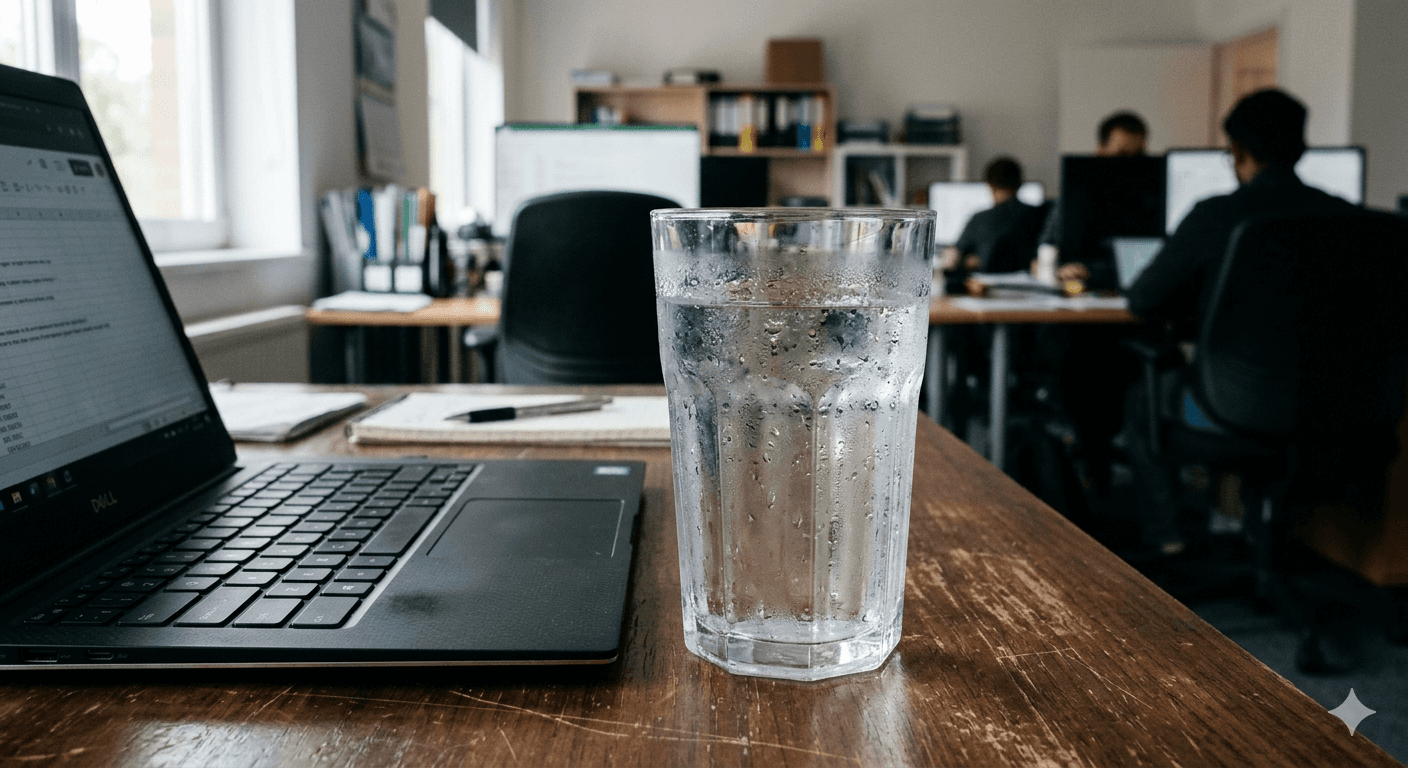
Most people know they should drink more water. Most people don't drink enough. The gap isn't information — it's habit. Drinking enough water is one of the simplest health behaviors to understand and one of the hardest to make consistent, because water has no taste reward, no obvious hunger-like signal, and no built-in reminder in the average day. Building hydration as a genuine habit requires exactly what all behavioral change requires: a specific cue, a specific behavior, and a consistent context. This is what that looks like in practice.
Why Chronic Underhydration Is So Common
Thirst is a late indicator of dehydration — by the time you feel thirsty, you're already physiologically behind. A 2022 study in Nutrients found that over 95% of US adults aged 51–70 were chronically underhydrated, and a PREDIMED-Plus prospective cohort study found that 56% of participants were physiologically dehydrated despite reporting that they met daily water recommendations. The self-perception of adequate hydration is frequently inaccurate.
The mechanisms matter. Chronic mild underhydration — not clinical dehydration, just consistently drinking less than the body needs — produces fatigue, reduced concentration, increased perception of hunger (the brain sometimes reads dehydration as hunger), and impaired cognitive performance. A 2023 prospective study in BMC Medicine following 1,957 adults over two years found that hydration status was associated with cognitive performance changes — better-hydrated participants showed better cognitive trajectories at follow-up.
For eating specifically: mild dehydration produces a signal that the body often interprets as hunger. People reach for food when the body actually needs water — a behavioral pattern that adds caloric intake without addressing the underlying need.
Why "Drink More Water" Fails as Advice
The instruction to drink more water fails for a structural reason: water has no pull. Coffee has caffeine. Food has taste reward. Alcohol has social ritual. Water has none of these — it's neutral by design, which means nothing in the environment actively cues you to drink it. Without external cues, hydration depends entirely on internal signals (thirst) — which arrive late and unreliably for most people.
A 2023 Oxford University review on nudging people toward fluid intake confirmed that unlike food, which has strong sensory and environmental cues, water lacks the attentional-capture properties that make other behaviors automatic. The review found that environmental cues — placing water bottles visibly, habit stacking onto existing behaviors — were significantly more effective at increasing fluid intake than knowledge or motivation interventions.
The behavioral solution: don't rely on thirst or intention. Attach water drinking to cues that already exist in your day.
The Sip Happens Habit: What It Actually Is
Sip Happens is one of eight habits in the Eated app — and it's the one that makes the most immediate difference for people who struggle with chronic underhydration.
The core principle: hydration isn't a quantity goal, it's a behavior pattern. Instead of "drink 2 litres of water today" — which requires tracking, remembering, and often a panicked catch-up attempt at 9pm — Sip Happens links drinking to specific moments that already exist in your day.
Each day in the Sip Happens habit, you receive one specific micro-task. Not "drink more water" — something exact, doable, and anchored to a real moment. Examples of what these tasks look like:
"Every time you sit down at your desk today, take three sips before you open anything." The cue is sitting down — something that happens dozens of times a day. No timer needed. No tracking needed. Just three sips each time. By the end of a workday, that's a significant volume of water consumed automatically.
"Put a glass of water next to your kettle before you go to bed tonight. Tomorrow morning, drink it before your coffee." One glass before caffeine. The kettle is already a morning ritual. The water rides on an existing cue. It takes thirty seconds to set up and requires zero morning willpower.
"Your next Zoom call or meeting — keep a glass of water visible on your desk. Drink during transitions: when someone else is talking, when you're unmuted, during any pause." Meetings are dead time for hydration. This task converts passive sitting into an active hydration opportunity without adding anything to your schedule.
"Set one water alarm for 3pm today. When it goes off, drink a full glass before dismissing it." The afternoon energy dip is partly dehydration. One alarm, one glass, specific time.
What makes these tasks different from generic water advice: they're attached to a specific existing cue in your actual day, they have a defined completion point (three sips, one glass, during the meeting), and they're small enough to actually do even on a difficult day.
Over eight days of the first circle, you experience eight different micro-strategies for hydration — and you discover which ones fit naturally into your specific schedule and life. By the second circle, the tasks build on what worked. By the third, the patterns that stuck have become genuinely habitual.
The Science Behind Why This Approach Works
A 2024 University of Arkansas study examining hydration habits found that hydration knowledge alone did not predict hydration status — what predicted it were actual behavioral habits around fluid intake. People who had established routines around drinking were better hydrated than people who knew they should drink more but hadn't built the behavior. This mirrors the broader habit literature: information changes intention; behavior change changes outcomes.
The approach of habit stacking — attaching a new behavior to an existing one — is one of the most evidence-supported techniques in behavioral science for building consistent new habits. The morning coffee is already a ritual; adding a glass of water before it requires no new time and minimal new decision-making. The desk sitting happens automatically; adding three sips to it creates dozens of small hydration opportunities from a zero-effort cue.
The key is that these micro-behaviors aggregate. Three sips twelve times a day is more water than most people drink when they rely on thirst alone — and it's consumed throughout the day rather than front-loaded in the morning or back-loaded at night.
What Adequate Hydration Actually Looks Like
The standard "eight glasses a day" recommendation is not evidence-based — it's a misremembering of a 1945 guideline that included water from food. Actual recommendations from the European Food Safety Authority are 2.0 litres total water per day for women and 2.5 litres for men — including water from food, which accounts for roughly 20-30% of total intake.
In practice: aiming for 1.5–2 litres of water as a beverage throughout the day, in addition to normal food intake, meets the recommendation for most adults in temperate climates. This increases in hot weather, during exercise, and during illness.
The most reliable self-assessment of hydration status is urine colour: pale yellow indicates adequate hydration; dark yellow or amber indicates you need more fluid. This is more accurate than counting glasses and requires zero effort.
Why Hydration Matters for Eating Behavior Specifically
For the purposes of this blog and Eated's approach, the most directly relevant effect of hydration is on hunger signaling.
Mild dehydration produces physiological signals that the brain interprets as hunger — producing food-seeking behavior when the body actually needs water. This is particularly common in the afternoon and evening, when cumulative daily dehydration peaks. The snack reach at 3pm, the evening hunger that doesn't seem related to when you last ate — these are frequently hydration signals misread as food signals.
The practical intervention: before eating a snack or reaching for food outside of main meals, drink a glass of water and wait ten minutes. If the hunger passes or significantly diminishes, it was a hydration signal. If it persists, it's real hunger. This single habit — water before snacks — produces both better hydration and better differentiation between genuine hunger and thirst confusion.
"Hydration is the habit I recommend first to clients who complain of afternoon energy crashes and constant snacking. Not because water is magic, but because mild dehydration is invisible — people don't feel thirsty, they feel tired and hungry. A glass of water before every afternoon snack changes the picture faster than almost anything else. It's the easiest win in nutrition."
— Irene Astaficheva, PN1, PN-SSR, GGS-1
How to Try Sip Happens Today (Before Downloading Anything)
Before you even open an app, try this for one day:
Morning: one glass of water before your first coffee or tea. Not after. Before. Keep the glass next to the kettle tonight so it's ready.
Workday: every time you sit down at your desk, take three sips. Don't count them. Just sip before you open anything.
Afternoon: when the 3pm energy dip arrives, drink a full glass of water before reaching for a snack. Wait ten minutes.
Evening: one glass with dinner.
That's approximately 1.2–1.5 litres of additional water from four behaviors attached to four existing cues. No tracking, no app required to try it. But if you find yourself wanting the daily task and the structure — the specific micro-action, the daily explanation of why it works, the streak to close — that's exactly what Sip Happens in Eated is built around.
Honest Limitations
Individual hydration needs vary significantly based on body size, activity level, climate, diet composition, and health status. The 2.0–2.5 litre recommendation is a population average — some people need more, some less. Conditions including kidney disease, heart failure, and certain medications alter fluid balance significantly; people with these conditions should follow medical guidance rather than general recommendations.
The confusion between hunger and thirst (interoceptive overlap) is real but not universal — not all snack cravings are hydration signals. The "water before snack" test is a practical filter, not a definitive diagnostic.
Coffee and tea contribute to daily fluid intake — the dehydrating effect of caffeine is much smaller than their fluid contribution, and moderate caffeine intake does not meaningfully reduce overall hydration status. Alcohol does produce net dehydration and should not be counted toward fluid intake targets.
FAQ
How much water should I actually drink per day? Aim for 1.5–2 litres of water as a beverage, in addition to water from food. Total daily water intake including food sources should reach approximately 2.0 litres (women) or 2.5 litres (men) per EFSA guidelines. Urine colour is a more practical indicator than a specific number: pale yellow = adequate, dark yellow = drink more.
Does coffee dehydrate you? Mildly, at high doses — but not enough to offset its fluid contribution. A typical cup of coffee contains 240ml of fluid; the diuretic effect removes slightly less than that. Net result: coffee contributes to daily fluid intake, not against it. You don't need to compensate for coffee with extra water. Alcohol works differently — it's a net dehydrator and shouldn't be counted toward intake targets.
I always forget to drink water. What actually helps? Environmental cues work better than intention. Keep a water bottle at your desk where you can see it (not in a bag or drawer). Attach three sips to something you already do — sitting down, opening your laptop, a meeting starting. One glass before your morning coffee. One glass before snacks. These are habit stacks onto existing cues — they work because they don't require remembering.
Is sparkling water the same as still? Yes — from a hydration standpoint, sparkling water is equivalent to still. For people who find plain water unappealing, sparkling water or water with a slice of lemon, cucumber, or mint significantly increases fluid intake without adding sugar. This is a straightforward switch worth making if it produces consistent intake.
Can you drink too much water? Yes, but it's rare outside of endurance athletes consuming very large volumes in short periods. For typical adults consuming water throughout a day in response to thirst and habit cues, overhydration is not a meaningful risk. The practical hydration goal — 1.5–2 litres of beverage water per day — is well below any threshold of concern.
Bottom Line
Water doesn't cue itself. Without built-in reminders and established habits, most people chronically underdrink — not from laziness but because thirst arrives late and the environment doesn't remind you. The solution is habit stacking: three sips when you sit at your desk, a glass before your morning coffee, water before an afternoon snack, a glass with dinner.
Small, consistent, attached to existing cues. That's the entire strategy. No tracking, no app required to start — just a glass in the right place at the right time.
Try It in Eated
If you want the daily micro-task, the explanation of why each specific action works, and the streak mechanic that makes the habit stick — Sip Happens is one of eight habits waiting for you in Eated.
The Eated app is free to download on iOS. 7-day free trial · $9.99/month or $59.99/year after.