GLP-1 medications like Ozempic and Wegovy don't shrink your stomach — but they do fundamentally change how it behaves. By slowing gastric emptying and amplifying satiety signals in the brain, these drugs make you feel full faster and stay full longer. The catch: smaller portions don't automatically become better-quality portions. Understanding what actually changes — and what doesn't — makes the difference between losing fat and losing muscle.
What GLP-1 Medications Actually Do to Digestion
GLP-1 (glucagon-like peptide-1) is a hormone naturally produced in your gut after eating. It signals to your brain that food has arrived, slows the movement of food from your stomach into the small intestine, and suppresses glucagon — the hormone that raises blood sugar. GLP-1 receptor agonists like semaglutide and tirzepatide mimic and amplify these effects continuously, not just after meals.
The result is a cascade of changes in how digestion feels:
Gastric emptying slows significantly. Food stays in the stomach longer than usual. Research confirms that GLP-1 receptor agonists slow gastric emptying by relaxing stomach muscle and reducing antral and duodenal motility — the coordinated contractions that move food along. What used to take two to three hours in the stomach may now take four to five or more.
Satiety arrives earlier. Because the stomach fills more slowly and holds food longer, stretch receptors in the stomach wall signal fullness sooner than they would otherwise. You feel satisfied after a smaller volume than before.
Appetite signals from the brain quiet down. Independently of the gut effect, GLP-1 receptors in the hypothalamus and brainstem are directly activated by the medication, reducing hunger signaling at the source.
Together, these three mechanisms mean your relationship with portion size changes — often dramatically, especially in the first months of treatment.
What Gets Smaller — and What Doesn't
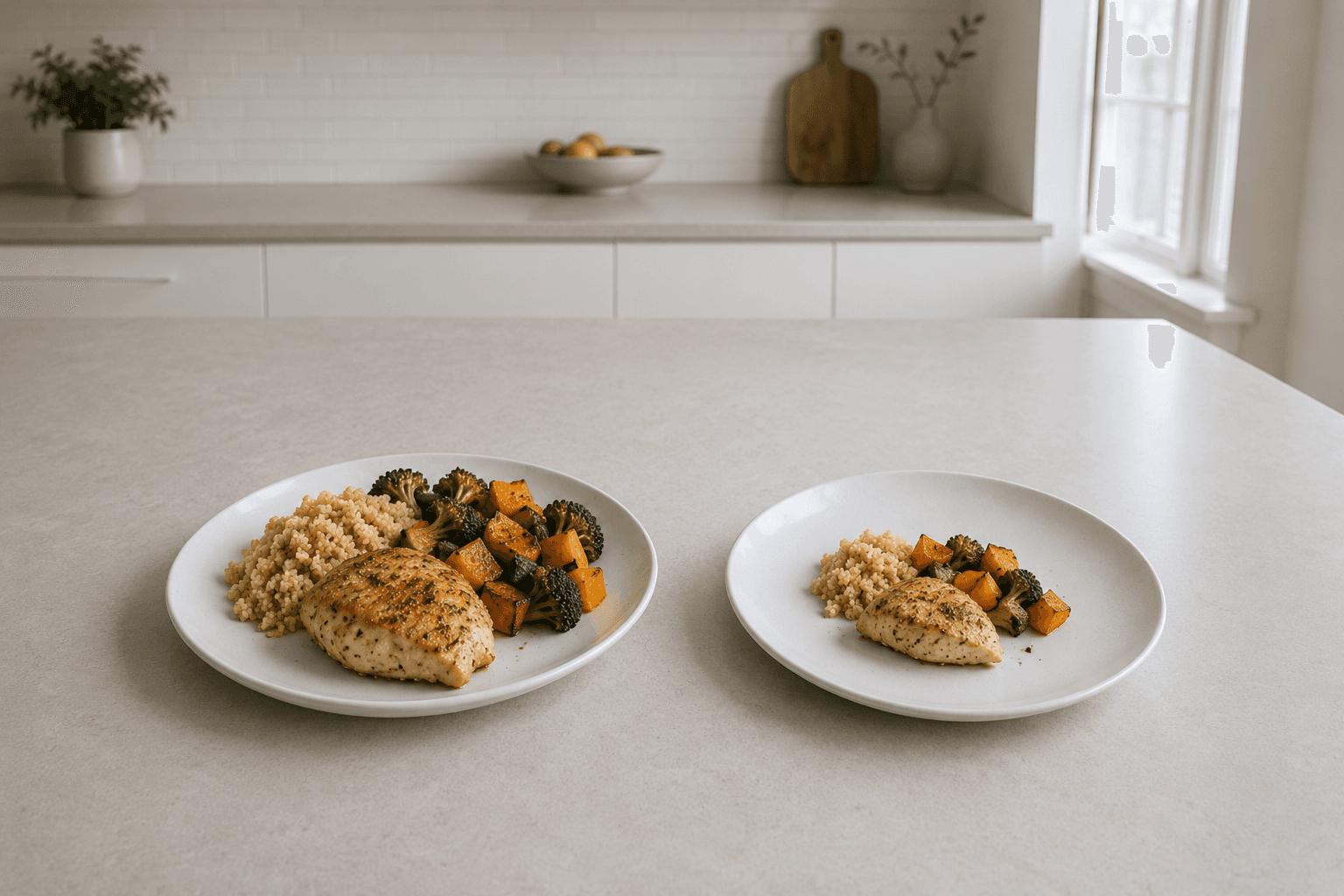
The obvious change is volume. Most people on GLP-1 medications report eating noticeably less at each meal — sometimes half or less of what they ate before — without feeling deprived. This is the pharmacological effect working as intended.
What doesn't change automatically:
Food quality. The medication doesn't make nutrient-dense foods more appealing or direct you toward them. You'll feel full on a small plate of Greek yogurt and vegetables. You'll also feel full on a few biscuits. The appetite suppression is indiscriminate.
Protein targets. Active weight loss requires 1.2–1.6g of protein per kilogram of body weight daily to protect lean muscle mass. When your total food volume drops significantly, hitting that target requires deliberate prioritization — protein has to come first on the plate, not be left until last when you're already full.
Eating patterns. GLP-1 medications don't restructure your eating habits, meal timing, or food choices. Habit formation is a separate process that happens alongside the drug — not because of it.
Irene's note: "The clients who do best on GLP-1 medications are the ones who treat the reduced appetite as an instruction, not just a convenience. It's telling you: choose carefully, because you only have this much space. That's a completely different relationship with food than eating freely and hoping for the best."
Why Slowed Gastric Emptying Changes Which Foods Work
The delayed gastric emptying that GLP-1 medications produce has a direct effect on food tolerance — and it's why some foods that were fine before can now cause significant discomfort.
High-fat foods become more problematic. Fat already slows gastric emptying on its own. Combined with the medication's effect, fatty or fried foods can sit in the stomach for an extended period, significantly increasing nausea, bloating, and discomfort. This isn't intolerance — it's compounded delay.
Carbonated drinks amplify fullness uncomfortably. Gas from carbonation expands in a stomach that's already moving slowly, causing bloating that can feel disproportionate to the amount consumed.
Raw cruciferous vegetables in large amounts can cause issues. Cabbage, broccoli, cauliflower — high-fiber vegetables that produce gas as they ferment — can be more troublesome when the gut is moving at a slower pace. Cooking them reduces this significantly.
Ultra-processed foods remain a specific risk. These foods are engineered to activate brain reward circuits that override homeostatic satiety signals — the dopamine-driven pathways that make you want more regardless of whether you're physically hungry. GLP-1 medications reduce but don't eliminate this effect. You may still find it easier to eat a full bag of crisps than a full plate of chicken and vegetables, even on medication.
The Palm Method as a Practical Framework on GLP-1
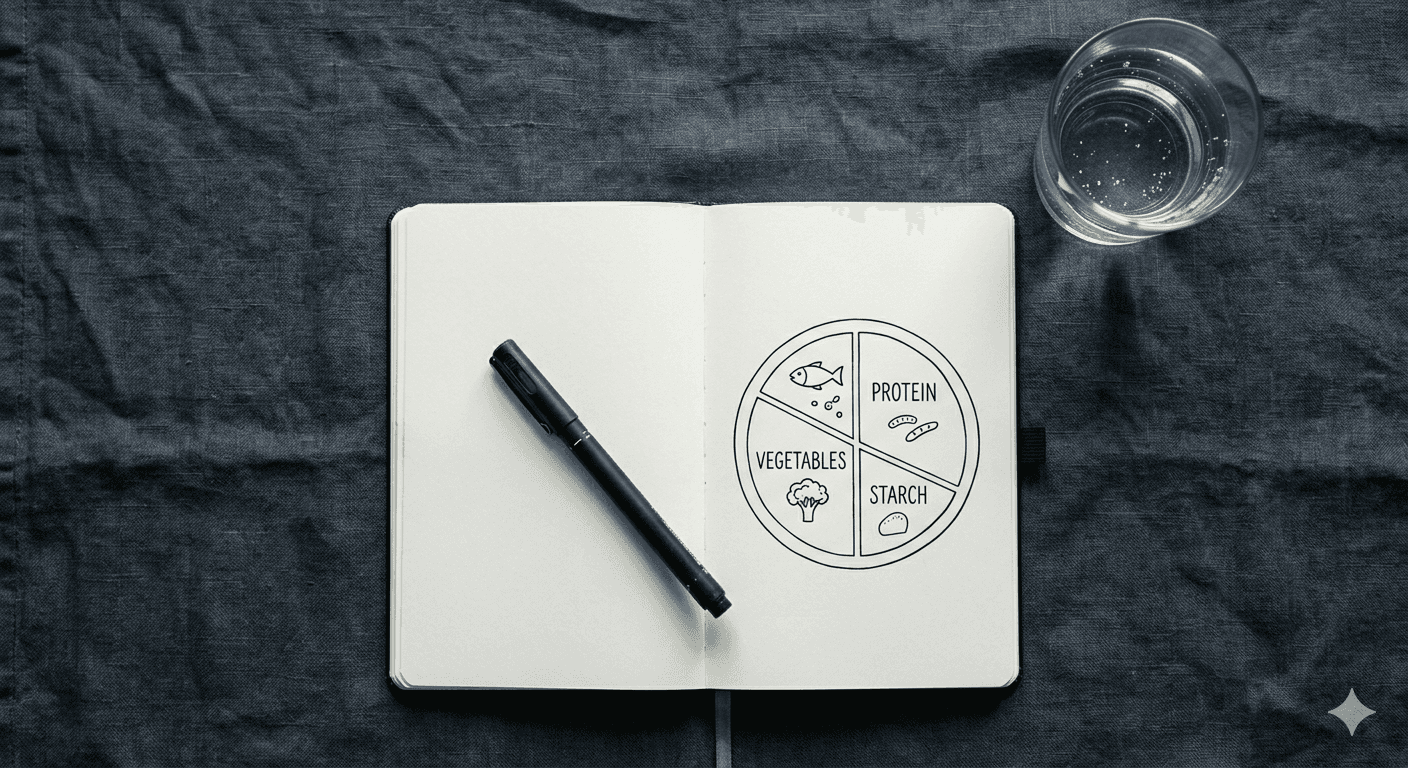
When total food volume shrinks, formal portion tracking can feel both unnecessary and burdensome. A simpler and research-validated approach is palm-based portion sizing — using your hand as a consistent reference for protein, vegetable, grain, and fat portions at each meal.
On GLP-1 medications, the palm method serves a specific purpose: ensuring that what fits on your smaller plate is structured, not random. A flat palm of protein, two fists of vegetables, one cupped hand of grains — this takes seconds to apply and doesn't require logging, databases, or a food scale.
The goal isn't to eat a full plate. It's to ensure that whatever you do eat has the right composition. Protein and vegetables first. Grains if there's room. Fat in small amounts throughout.
For a full breakdown of how palm sizing works across food groups, the portion control guide here walks through each category in practical detail.
What Changes Over Time — and When to Reassess
GLP-1 medications are typically titrated upward over the first 16–20 weeks, meaning their effect on gastric emptying and appetite generally intensifies before stabilizing. Many people experience the strongest appetite suppression — and the most dramatic portion reduction — in this early phase.
Over time, several things can shift:
Tolerance to the medication often improves, and some foods that caused discomfort initially become easier to manage
The strong appetite suppression of early treatment may moderate slightly
Weight loss itself changes nutritional needs — as body weight decreases, protein targets adjust accordingly
This is why a static eating plan set at week two of treatment may not be appropriate at week thirty. Food choices and portion structure benefit from periodic reassessment alongside body weight and energy levels.
Honest Limitations
The research on GLP-1 medications and their specific effects on gastric emptying shows notable individual variability — some people experience significant delay, others minimal. The relationship between gastric emptying rate and food tolerance is not linear or fully predictable. Food recommendations for GLP-1 users are largely based on clinical experience and general weight loss research rather than dedicated dietary trials in this population. If you're experiencing significant GI side effects that don't improve with food adjustments, speak with your prescribing physician — the dose or medication timing may need to be reviewed.
FAQ
Do GLP-1 medications make your stomach smaller? No. They don't change the physical size of your stomach. They slow gastric emptying — how quickly food leaves the stomach — and amplify satiety signals in the brain. The effect is feeling full sooner and for longer, not a structural change.
Why do I feel nauseous after eating fatty foods on Ozempic? Fat naturally slows gastric emptying, and GLP-1 medications slow it further. The combined effect means fatty or fried foods sit in the stomach significantly longer than normal, which causes nausea, bloating, and discomfort in many people. Choosing lower-fat, easily digestible foods reduces this substantially.
How do I know if I'm eating enough on GLP-1 medications? Signs of under-eating include persistent fatigue, muscle weakness, hair thinning, and difficulty concentrating. A practical check: are you getting at least one palm-sized portion of protein at every meal? If not, under-eating protein is the most likely nutritional gap.
Can I still overeat on Ozempic? Yes — particularly on ultra-processed foods, which are engineered to activate reward pathways that operate partly independently of homeostatic satiety signals. GLP-1 medications reduce appetite effectively, but don't fully override the pull of highly palatable food.
Should I change my portion sizes as I lose weight on GLP-1? Yes, periodically. As body weight decreases, protein targets adjust (they're calculated per kilogram of body weight), and energy needs change. Reassess your eating structure every few months rather than setting it once and leaving it fixed.
Bottom Line
GLP-1 medications change the physiology of appetite and digestion significantly — but they don't change which foods are worth eating or how habits are built. The reduced appetite they produce creates a genuine opportunity: smaller plates force better choices, if you're intentional about what fills them. Prioritizing protein, building consistent food habits around the medication's effect, and understanding which foods work with slowed gastric emptying rather than against it — this is where the real work happens.
The drug opens the window. What you eat through it determines the outcome.
Build the Habits While the Window Is Open
If you're looking for a way to structure your eating on GLP-1 medications without tracking calories or macros, Eated uses the Harvard Plate Method and palm portion sizing to help you build consistent food habits one at a time. No numbers to log — just a clear daily framework.
Free to download · 7-day free trial · $9.99/month or $59.99/year