If you're on Ozempic or Wegovy, the apps most people recommend weren't built for your situation. Calorie trackers assume you need to manage intake through conscious restriction — but GLP-1 medications are already doing that pharmacologically. What you actually need from an app is different: food group structure, portion awareness, and habit-building support that works alongside suppressed appetite, not against it.
Why Most Weight Loss Apps Are the Wrong Fit for GLP-1 Users
The dominant app category for weight loss — calorie trackers like MyFitnessPal, Lose It!, and Cronometer — is built around one core mechanic: log every food item, count the calories, stay under a target. This is a reasonable approach in normal weight loss contexts. It is a poor fit for GLP-1 medication users for three specific reasons.
Your problem isn't calorie awareness — it's nutritional quality in a small volume. GLP-1 medications already suppress appetite dramatically. The challenge isn't eating too much; it's ensuring that what you do eat has the right composition — enough protein, enough vegetables, adequate micronutrients — within a significantly reduced volume. Calorie tracking tells you how much. It says nothing about what.
Research on popular nutrition apps finds that behavior change content is absent from the majority, even though dietary intake logging features are highly developed. For GLP-1 users who need to build lasting eating behaviors during the medication window, this is the critical missing element.
Tracking burden is high when appetite is suppressed and nausea is common. Looking up database entries and logging every item requires sustained effort at a time when food-related activity is already uncomfortable. Adherence to mobile dietary self-monitoring declines consistently over time even under optimal conditions — a system that takes under 30 seconds per meal is far more likely to survive the rougher early weeks of treatment.
What a GLP-1-Appropriate App Should Actually Do
The functional needs of someone on GLP-1 medications are specific:
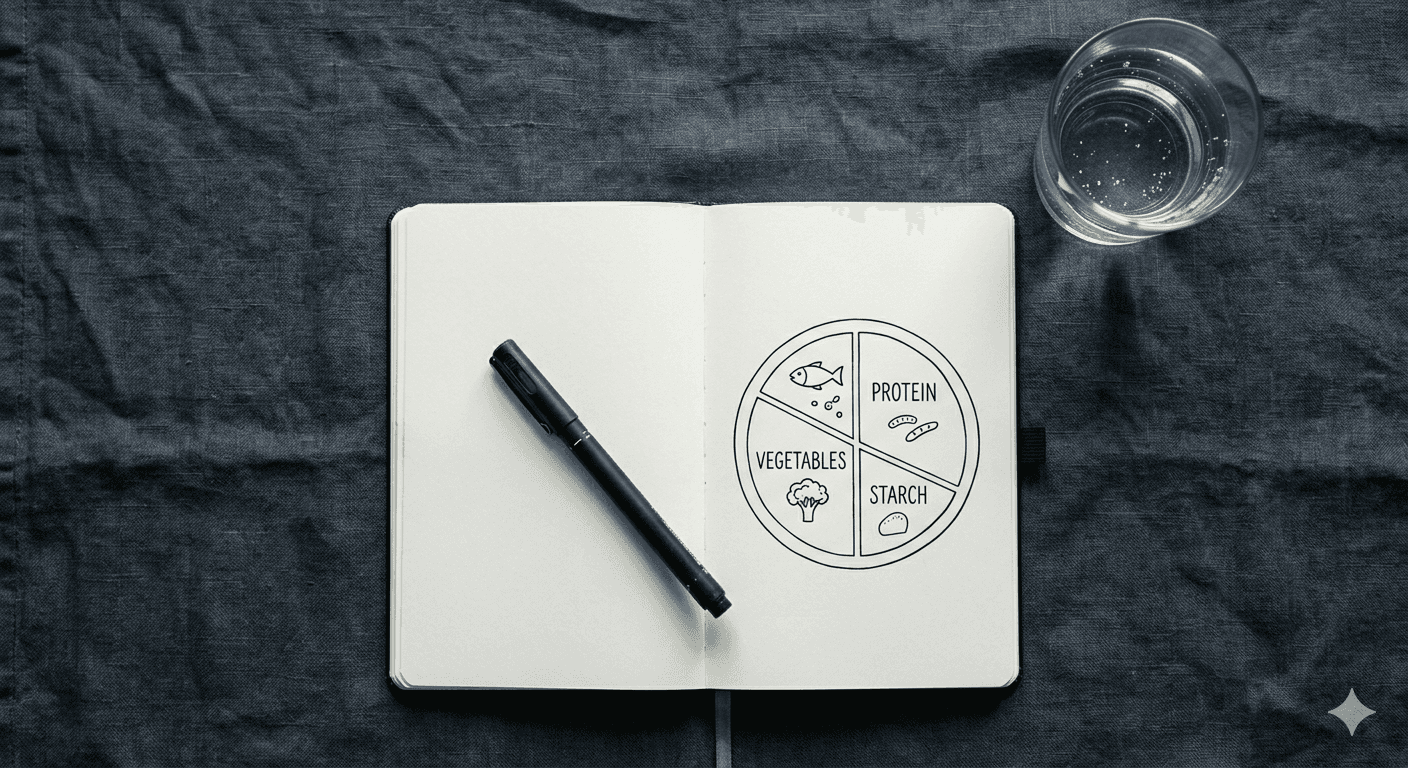
Food group and portion structure, not calorie targets. The priority question when eating a small plate is: does this have protein? Does it have vegetables? Am I using the limited space for foods that serve my nutritional needs? A plate-based framework — like the Harvard Healthy Eating Plate, evaluated in research as one of the most evidence-based visual nutrition tools available — answers this in seconds without database lookups or arithmetic.
Protein tracking, specifically. The single biggest nutritional risk on GLP-1 medications is under-eating protein and losing lean muscle alongside fat. People in active weight loss phases require 1.2–1.6g of protein per kilogram of body weight daily to protect lean mass — meaningfully higher than standard recommendations, and easy to miss when total food volume is suppressed. An app that makes protein intake visible at a glance addresses this directly.
Habit scaffolding, not just logging. What determines whether weight loss outcomes persist after stopping GLP-1 medications is whether new eating behaviors have become automatic during treatment. An app that supports one specific habit at a time, with daily prompts and a streak mechanism, builds this. An app that simply records what you ate doesn't.
No judgment architecture. Calorie trackers create psychological pressure around numbers — targets, deficits, red indicators when you exceed them. On GLP-1 medications, where the drug is already managing restriction volume, this pressure is unnecessary. A framework focused on food quality and structure rather than quantity keeps attention where it belongs.
The GLP-1 Tracker Category: Useful — But Not for This
A separate category of apps has emerged specifically for GLP-1 medication management: Shotsy, Pep, GLPeak, and similar tools. These are injection trackers — they manage dosing schedules, injection site rotation, side effect logging, and weight progress charts.
They're genuinely useful for medication logistics. They are not nutrition or habit apps. If you want to track your weekly dose and remember your injection day, they serve that purpose well. If you want to build the eating structure that determines what happens after stopping GLP-1 medications, they don't address this.
The most practical setup for many GLP-1 users is one app for medication management and a separate app focused on food structure and habit formation — keeping the two functions distinct rather than looking for a single tool that does both adequately.
How to Choose a Food App for GLP-1 Use
The full breakdown of what to look for in a non-calorie-counting weight loss app covers the criteria in detail, but the short version for GLP-1 users specifically:
Look for a plate-based or food group framework rather than a calorie database. Look for protein visibility — a clear indicator of whether you hit your protein target each day. Look for a habit layer, not just a log. And look for a design that doesn't penalize eating less than a target — because on GLP-1 medications, eating less is often the pharmacological reality, not a failure state.
What to avoid: apps that require extensive database lookups per meal, apps built around daily calorie budgets with deficit psychology, and apps that signal success or failure primarily through numbers rather than food quality.
What Eated Does — and Why It Fits GLP-1 Users
Eated wasn't designed specifically for GLP-1 users, but its structure maps unusually well to what this population needs.
The core mechanic is the Harvard Plate — a circular dashboard showing food group balance across vegetables, protein, grains, fruit, dairy, and fats. You log not by searching a calorie database but by selecting a food group and portion size using the palm method. Under 30 seconds per meal.
The habit layer sits on top: one habit at a time, an 8-day streak structure, and a daily specific task with clear guidance on exactly how to do it. For a comparison of how habit-based apps differ from calorie trackers on the criteria that matter most, the criteria there apply directly to GLP-1 contexts.
For GLP-1 users specifically:
The palm portion system scales naturally to small plates without recalibration
Protein is a named food group on the dashboard — under-eating it becomes visible immediately
The habit framework builds automaticity during the medication window
No calorie target, no deficit indicators, no judgment architecture around eating less
What Eated doesn't do: injection tracking, dosing schedules, or side effect logs. For those, a dedicated GLP-1 tracker alongside it.
Irene's note: "The clients I work with on GLP-1 medications who do best aren't logging every calorie — they've built a clear structure for what a good plate looks like and repeat it consistently. The drug handles the how much. The app should handle the what and the habit."
Honest Limitations
This post reflects one nutritionist's clinical perspective and publicly available information on app functionality as of May 2026. App features change frequently — check current versions before downloading. Eated is the app most directly recommended here, and the author is its co-founder. This is disclosed because transparency about conflicts of interest is more useful than pretending they don't exist. The comparison with GLP-1 tracker apps reflects their primary design purpose — medication management — not a criticism of their quality within that category.
FAQ
What's the best app for tracking food on Ozempic? For food structure and habit building, a plate-based app using the Harvard Plate Method and palm portions is better suited to GLP-1 users than calorie trackers. For injection management, Shotsy or Pep handle dosing logistics well. Most people benefit from using one of each rather than trying to find a single app that does both.
Should I use MyFitnessPal while on Wegovy? It depends on what you want from it. If you're specifically monitoring protein and don't mind database lookups, it can serve that purpose. But the calorie-target framework — deficits, red indicators, net calories — isn't what most GLP-1 users need when the drug is already managing intake volume.
Is there an app designed specifically for GLP-1 users? GLP-1 tracker apps (Shotsy, Pep, GLPeak) handle the medication management side — dosing, injection tracking, weight progress. For nutrition and habit building, no major app is GLP-1-specific; plate-based habit apps are the closest functional fit.
Do I need to track food at all on GLP-1 medications? Some form of awareness is useful — particularly around protein, which is easy to under-eat when appetite is suppressed. You don't need to count calories; a quick daily check that protein appeared at every meal is enough to catch the most common nutritional gap.
What happens when I stop taking Ozempic? Without a habit structure built during treatment, most people return to pre-medication eating patterns when appetite suppression ends. What your body goes through when you stop dieting covers the biological mechanics — understanding this picture is part of using the medication window deliberately.
Bottom Line
The app category that dominates weight loss — calorie trackers — was built for a different problem than the one GLP-1 users have. The drug is managing restriction. What the app needs to manage is structure, protein visibility, and habit formation. A plate-based, habit-first approach fits this context better, and it's light enough to use consistently through the difficult early weeks of treatment when side effects are at their peak.
Build Eating Habits While the Medication Does Its Work
Eated is free to download with a 7-day free trial. It uses the Harvard Plate Method and palm portion sizing — no calorie targets, no food database, no deficit tracking. One habit at a time, one day at a time.
Free to download · 7-day free trial · $9.99/month or $59.99/year