GLP-1 medications like Ozempic and Wegovy reduce appetite dramatically — but eating less doesn't automatically mean eating well. With portions shrinking to half or less of what you're used to, the foods you choose become significantly more important than before. The biggest risk most people miss: losing muscle alongside fat. Here's how to eat strategically while the drug is doing its work.
Why What You Eat on GLP-1 Matters More, Not Less
GLP-1 receptor agonists work by slowing gastric emptying, amplifying satiety signals, and reducing food noise — the constant background pull toward eating. Clinical trials show semaglutide produces an average weight loss of around 15% of body weight over 68 weeks. What those trials don't always highlight is what that weight is composed of.
Research on GLP-1 receptor agonists shows that 25–40% of total weight lost can come from lean body mass — not fat. On GLP-1 medications, where you may be eating 500–800 fewer calories per day than before, this risk is real and frequently underestimated.
Less food doesn't mean the nutrient math disappears. It means you have a smaller window to hit the same targets.
The Protein Priority: How Much, and Why
Protein becomes the non-negotiable anchor of your diet on GLP-1 medications. It does three things simultaneously: preserves lean muscle mass, extends satiety (which works synergistically with the medication), and has the highest thermic effect of any macronutrient — meaning your body burns more calories processing it.
Current evidence suggests that people in active weight loss phases need 1.2–1.6g of protein per kilogram of body weight per day — meaningfully higher than standard recommendations. For a 75kg person, that's 90–120g of protein daily.
On GLP-1 medications, where nausea and early satiety often make eating large volumes difficult, this means prioritizing protein at every meal — not saving it for later in the plate.
Practical protein sources that work well with reduced appetite:
Greek yogurt (17–20g per 200g serving)
Eggs (6g each, easy to eat in small amounts)
Cottage cheese (14g per 100g)
Chicken breast, turkey, white fish — lean and easy to digest
Legumes — lentils, chickpeas — combine protein with fiber
Irene's note: "Most of my clients on GLP-1 medications come to me eating around 40–50g of protein per day — half of what they need. When you're not hungry, protein is easy to skip. But muscle doesn't wait. I tell them: protein isn't optional, it's the job. Everything else fills in around it."
The Harvard Plate Still Works — With One Adjustment
The Harvard Healthy Eating Plate provides a reliable structure: half vegetables and fruit, a quarter protein, a quarter whole grains. On GLP-1 medications, this framework remains sound with one adjustment — when your total volume is small, the protein quarter needs to stay firm even if the grains quarter shrinks.
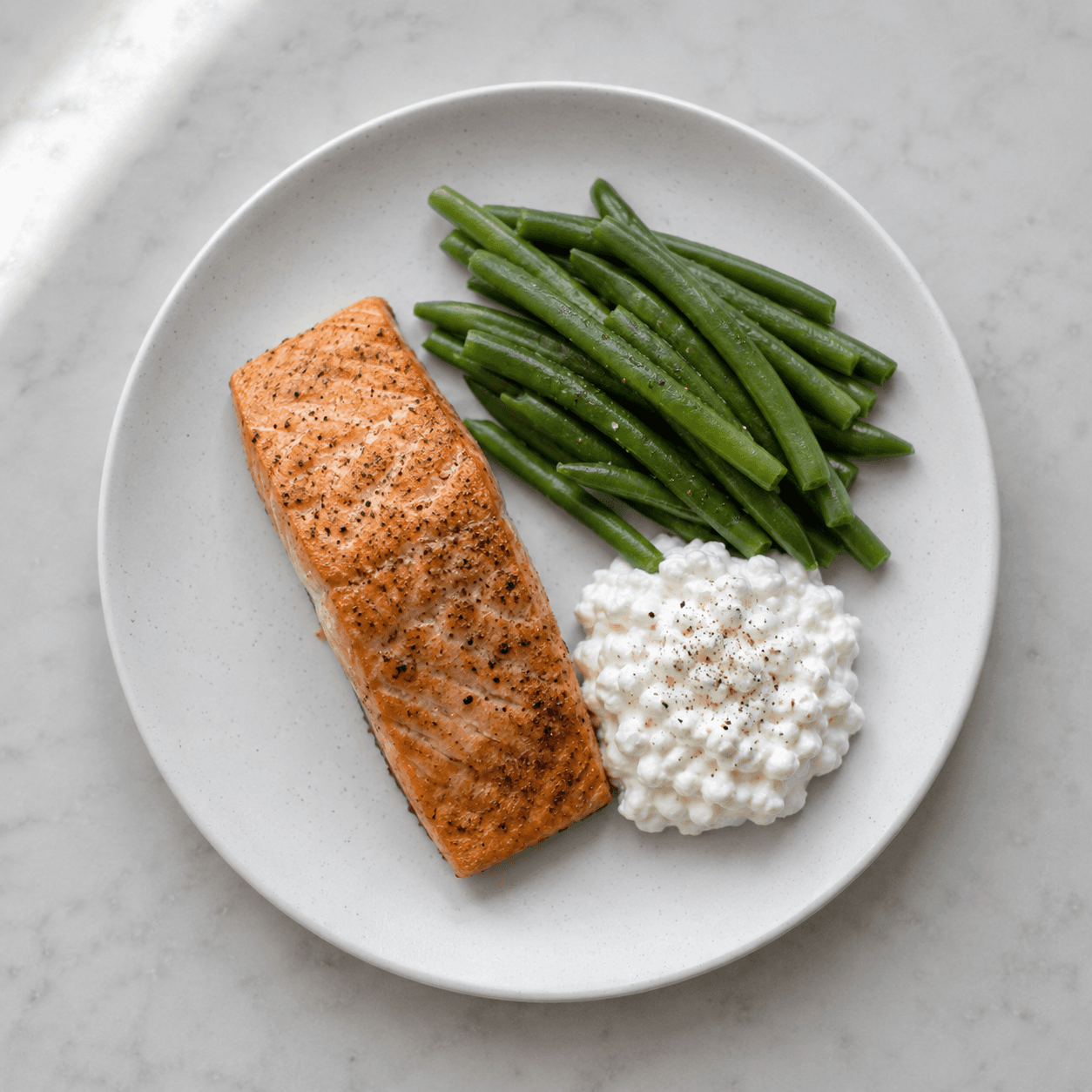
A practical approach: build your plate protein-first, vegetables second, grains third. If you can only eat two-thirds of a normal plate, let the grain portion be what you leave behind — not the protein or vegetables.
This isn't a low-carb prescription. Whole grains provide fiber, B vitamins, and sustained energy. But when the plate has to shrink, nutrient density has to stay high — and protein and vegetables deliver more per gram than refined carbohydrates.
Foods That Work Well on GLP-1 Medications
Easy to eat, high nutrient density
Eggs — versatile, protein-dense, easy on a sensitive stomach
Soft-cooked fish (salmon, cod, tilapia) — protein plus omega-3, easy to digest
Avocado — healthy fats, takes small volume, calorie-dense in a useful way
Soft vegetables — cooked zucchini, spinach, roasted sweet potato
Greek yogurt — protein plus probiotics, cold and easy when nauseous
Smoothies — useful when solid food is difficult; add protein powder or Greek yogurt
What tends to cause problems
High-fat, fried foods — GLP-1 medications slow gastric emptying; fatty foods slow it further, significantly increasing nausea risk
Carbonated drinks — can cause uncomfortable bloating and fullness
High-fiber raw vegetables in large amounts — cruciferous vegetables like broccoli and cabbage can cause gas when the gut is already moving slowly
Ultra-processed snacks — easy to overeat even on GLP-1 because they're engineered to bypass satiety signals; the medication reduces but doesn't eliminate this effect
What Happens to Your Nutrition When You Stop
This is where the evidence becomes uncomfortable to ignore. The STEP 1 trial extension — the largest discontinuation study on semaglutide — found that participants regained two-thirds of their prior weight loss within one year of stopping the medication, with cardiometabolic markers returning toward baseline alongside it.
The mechanism is straightforward: the drug was suppressing appetite, not building the habits or food knowledge to sustain lower intake independently. When the pharmacological effect disappears, old patterns return.
This is why the eating window while on GLP-1 medications isn't just about weight loss — it's about building the behavioral infrastructure that persists after the drug. The appetite suppression creates a window of opportunity. What you do with that window determines the long-term outcome.
Hydration: Often Missed, Frequently the Problem
Reduced appetite often extends to reduced thirst — many GLP-1 users inadvertently become mildly dehydrated without noticing. Dehydration worsens nausea, increases fatigue, and is frequently mistaken for hunger or medication side effects.
Aim for 2–2.5 litres of water per day. Electrolytes (sodium, potassium, magnesium) become more important as food intake drops — they're primarily obtained through diet, and a reduced diet delivers less of them. If you're experiencing persistent fatigue, muscle cramps, or headaches, electrolyte intake is worth examining before adjusting anything else.
How to Track Without Obsessing
The challenge with GLP-1 medications is that appetite suppression can make it easy to under-eat — particularly protein and vegetables — without realizing it. Calorie tracking at this level becomes both tedious and counterproductive.
A more functional approach: use a portion-based framework like the palm method to check that protein is present at every meal, vegetables appear at least twice daily, and meals aren't skipped entirely because you didn't feel hungry. The goal isn't optimization — it's sufficiency and pattern.
Apps that focus on food groups and habits rather than calorie targets are practically better suited to this context than traditional trackers. When your appetite is being chemically suppressed, the last thing you need is another number to manage.
Honest Limitations
GLP-1 medications are still relatively new in widespread use, and research on optimal dietary strategies specifically for people taking semaglutide or tirzepatide is limited. Most protein and nutrient recommendations here are extrapolated from broader weight loss research rather than GLP-1-specific dietary trials. Individual responses vary significantly — what causes nausea in one person is well tolerated by another. This guide reflects current nutritional evidence and clinical experience; it is not a substitute for working with a registered dietitian, particularly if you have underlying conditions such as type 2 diabetes, kidney disease, or a history of disordered eating.
FAQ
What should I eat first on my plate when taking Ozempic? Protein first, always. When appetite is reduced and you can only eat a small volume, prioritizing protein at the start of every meal ensures you hit your muscle-preservation targets before you feel full.
How much protein do I need on GLP-1 medications? Current evidence suggests 1.2–1.6g per kilogram of body weight per day — roughly 90–120g for a 75kg person. This is higher than standard recommendations and more critical during active weight loss when lean mass loss risk is elevated.
What foods should I avoid on Ozempic? High-fat fried foods, carbonated drinks, and large amounts of raw cruciferous vegetables tend to worsen nausea and bloating because GLP-1 medications already slow gastric emptying. Ultra-processed snacks are worth limiting because they're engineered to override satiety signals even when pharmacologically suppressed.
Can I lose muscle on Ozempic? Yes. Research on GLP-1 receptor agonists shows that 25–40% of total weight lost can come from lean body mass. Adequate protein intake and, where possible, resistance training are the two primary strategies for limiting this.
Do I need to track calories on Ozempic? Strict calorie tracking is rarely useful in this context. A more practical approach is tracking food groups — ensuring protein and vegetables are present at every meal — using a portion-based framework rather than calorie counts.
Bottom Line
GLP-1 medications create a powerful window — reduced appetite, lower food noise, easier adherence to smaller portions. The question is what you build inside that window. Prioritizing protein at every meal, maintaining a vegetable-heavy plate structure, staying hydrated, and using the reduced-appetite period to build sustainable eating habits rather than just eating less — these are the moves that determine whether results last after the prescription ends.
The drug changes the appetite. The habits change the outcome.
Try a Habit-Based Approach Alongside Your Medication
If you're on GLP-1 medications and want a way to track food groups and build eating habits without counting calories, Eated is built exactly for this. The app uses the Harvard Plate Method and palm portion sizing — no calorie targets, no macro tracking — and guides you through one habit at a time using a structured 8-day framework.
Free to download · 7-day free trial · $9.99/month or $59.99/year