Most apps marketed as "calorie-free" still count. They use color codes, point systems, portion scores, or photo analysis — different interfaces, same underlying logic: eat less, track it, repeat. If that mechanism failed you before, a cleaner version of it won't produce different results.
The apps worth considering here work through a different mechanism entirely — changing what you eat, how you respond to hunger, and which eating patterns run on autopilot. This guide covers the four best options, what each one actually does, and who each one works for.
The Problem With Most "No Calorie" Apps
Before getting into specific apps, it's worth naming the pattern that causes most people to end up back where they started.
The most common failure mode isn't picking the wrong app — it's picking an app that addresses the symptom (not tracking) while leaving the underlying behavior unchanged. You stop logging numbers, but the same foods go on the same plate in the same situations. Nothing about your actual eating pattern shifts. A few weeks in, progress stalls, and the app gets deleted.
What produces durable weight loss isn't restriction — it's changing what your default eating behavior looks like. A 2024 systematic review of long-term weight maintenance found that behavioral predictors — habit automaticity, flexible rather than rigid control, consistent patterns across varied contexts — outperformed dietary restriction as predictors of sustained results at three years and beyond. More than 80% of people who lose weight through restriction regain it within three years. The mechanism matters more than the effort.
The apps below are evaluated on whether they actually change the mechanism — not just the tracking format.
1. Eated — Best for Habit-Based Weight Loss Without Any Numbers
The mechanism: Eated is built on two things — the Harvard Plate Method as a visual framework for meal composition, and BJ Fogg's Tiny Habits model for building one eating behavior at a time. There are no calories, no macros, no food database to search.
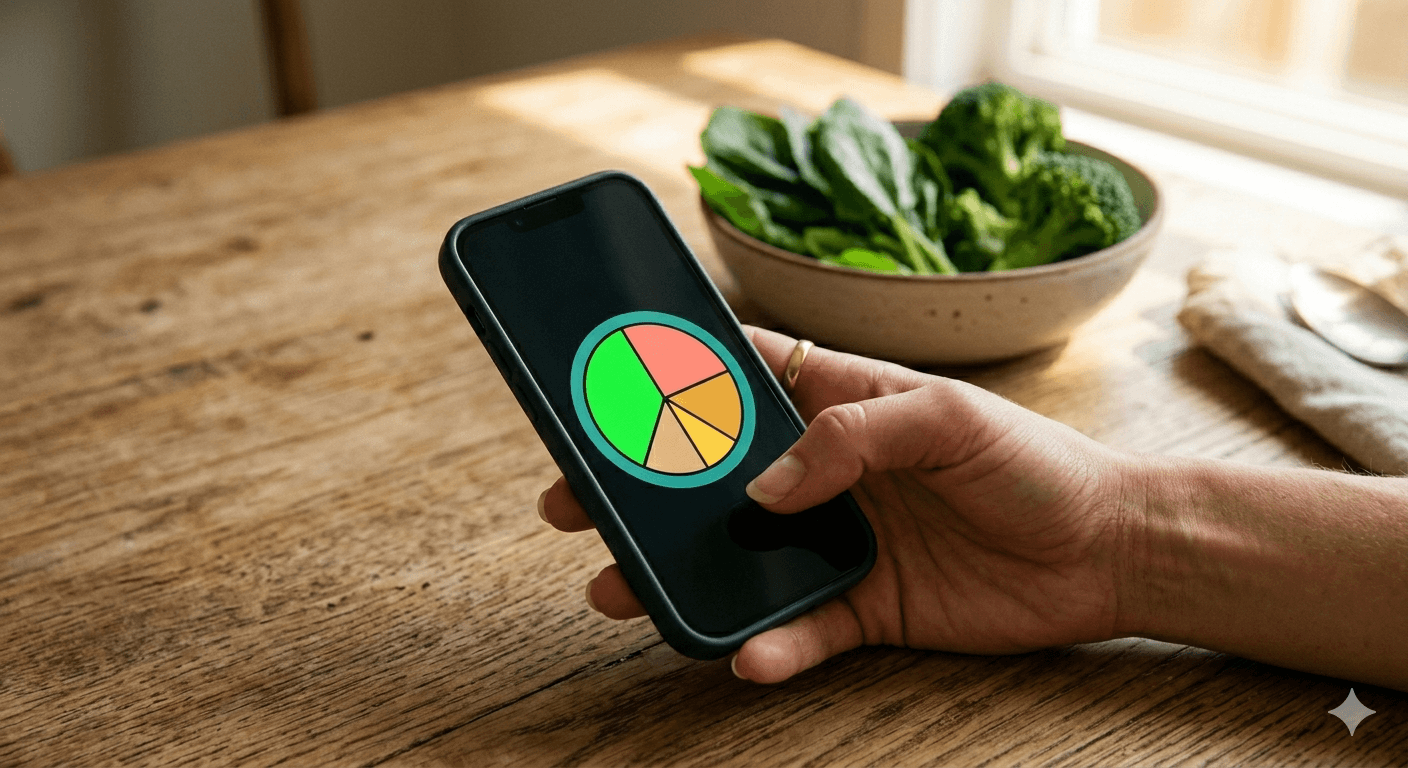
Instead of logging numbers, you log your plate visually — tracking how your meals balance across Harvard Plate proportions: half vegetables and fruits, a quarter protein, a quarter whole grains, healthy fats on the side. The app tracks how consistently your plates hit that composition over time, and a Food Coach feature delivers a personalized daily insight each morning — one thing you did well yesterday, one small shift for today.
The habit layer works like this: you pick one of eight habits to work on — eating more vegetables, getting adequate protein, eating slower, reducing sugar dependence, improving food variety, among others — and commit to it for 24 days across three 8-day cycles. Each cycle includes a daily task that is specific and behavioral, not just aspirational. "Eat more vegetables" becomes "put vegetables on your plate before anything else." After 24 days of consistent repetition, the behavior starts running without deliberate effort — which is precisely the point.
Why it works for weight loss specifically: The Harvard Plate structure reduces calorie density without any counting. Half a plate of vegetables and fruits displaces higher-calorie foods and increases fiber, which slows digestion and extends satiety. Research comparing composition-based eating to calorie restriction consistently shows comparable weight loss outcomes over 12 months — with significantly better behavioral sustainability.
"The pattern I see most often in clients who struggle to lose weight isn't that they're eating too much of the wrong things — it's that they're not eating enough of the right ones. Half a plate of vegetables sounds almost too simple. But when it becomes what you automatically do rather than what you're trying to remember to do, it changes your entire caloric baseline without you ever thinking about calories." — Irene Astaficheva, PN1, GGS-1, co-founder of Eated
If you've been cycling through calorie trackers and coming back to square one — the issue probably isn't discipline, it's mechanism. Eated's Eat More Veggies and Hunger Check habits are exactly where most people need to start. Free to download, 7-day free trial of full features including AI Scan and Food Coach.
Try Eated free on the App Store →
Best for: People whose eating problems are behavioral — eating the same foods on autopilot, plates consistently light on vegetables and protein, eating past fullness from habit. People who want structure without any tracking.
One limitation worth naming: Eated is iOS only, and results come gradually. This isn't a rapid-loss approach. People who need dramatic short-term numbers to stay motivated will find the pace frustrating, though in the long run this approach is much more sustainable.
Pricing: Free to download · 7-day free trial · $9.99/month or $59.99/year
2. Noom — Best if the Problem Is Psychological, Not Behavioral
The mechanism: Noom combines daily 5–10 minute psychology lessons drawn from cognitive behavioral therapy with a color-coded food awareness system (green, yellow, red by calorie density). It's worth being clear about what Noom actually is: it still involves categorizing food. It's not calorie counting, but it's a structured form of food awareness.
What makes it meaningfully different from a standard tracker is the CBT curriculum. Daily lessons address the behavioral and psychological drivers of eating — why you eat when you're not hungry, what triggers specific patterns, how to interrupt automatic responses. For people whose eating problems are primarily psychological — stress eating, emotional eating, habitual eating disconnected from actual hunger — this curriculum addresses root causes rather than symptoms.
Best for: People who've identified their eating as driven by stress, emotion, or psychological habit rather than behavioral default. People who want daily structured engagement with behavior-change content and don't mind a food categorization system alongside it.
One limitation worth naming: Noom still involves food logging and a tracking system. If tracking exhaustion is the problem rather than tracking psychology, Noom can recreate the same fatigue in a different form. Coaching quality also varies significantly between users. Annual plan runs approximately $17/month; monthly billing is substantially higher.
Pricing: Annual plan ~$17/month. 14-day trial available.
3. AteMate — Best for Rebuilding a Neutral Relationship With Food
The mechanism: AteMate is a photo-based food journal. You photograph meals instead of logging them numerically. Over time, visual patterns emerge — between food choices and mood, between stress and eating, between specific situations and overconsumption. The app surfaces these patterns; it doesn't prescribe what to do about them.
The "on path / off path" framing is genuinely non-punishing — a missed day doesn't break anything, there are no numerical targets to miss, and the focus is on what patterns look like across days and weeks rather than whether any single meal was "good" or "bad." For people coming off restrictive or obsessive tracking, this low-pressure format is often exactly the right first step before introducing any framework.
Best for: People who need awareness before structure. People with a history of obsessive tracking who need to rebuild a neutral relationship with food first. People who already know what they should be eating and need accountability rather than guidance.
One limitation worth naming: AteMate is an awareness tool, not a change tool. It shows you patterns clearly without providing a framework for changing them. Without additional behavioral structure, many people plateau at awareness — they understand their eating better but don't change it.
Pricing: Free tier available. Premium subscription for full features; 7-day free trial.
4. Lose It! — Best for Reducing Numbers, Not Eliminating Them
The mechanism: Lose It! is a calorie tracking app with a strong free tier, flexible target-setting, and a less friction-heavy interface than most. It belongs on this list for one specific reader: someone who wants to reduce numerical tracking intensity rather than eliminate it entirely.
It is still calorie counting. If the counting mechanism is what failed you, a cleaner version of it won't solve the underlying problem. But for people who found MyFitnessPal's precision and strictness exhausting rather than the counting itself, Lose It! offers a materially simpler experience with the same core functionality.
Best for: People who want lighter-touch numerical awareness, not people ready to move away from numbers entirely.
Pricing: Free tier available. Premium ~$40/year.
How to Choose
If this describes you | This app fits |
|---|---|
Same foods on autopilot, plates unbalanced, eating past fullness by habit, stress eating, emotional eating | Eated |
Stress eating, emotional eating, eating when not actually hungry | Noom |
Coming off obsessive tracking, need to rebuild food neutrality first | AteMate |
Want to reduce tracking intensity, not eliminate it | Lose It! |
What No App Can Do
No app produces weight loss on its own. What apps provide is structure, guidance, and accountability that reduce the friction of eating better — but the behavioral changes they support do the actual work.
Apps that remove calorie counting tend to produce slower initial results than aggressive restriction. This is expected, not a failure. Restrictive approaches produce faster initial loss and substantially higher long-term regain. Habit-based and composition-based approaches produce slower initial change and more durable patterns — which is the outcome that actually matters.
The most important variable isn't which app has the best features. It's which one you'll use consistently long enough for your default eating behavior to actually change.
FAQ
What is the best free app to lose weight without counting calories? Eated's free tier includes the Guide and basic plate logging with no calorie counting. AteMate has a functional free tier for photo journaling. For the full Eated experience — Food Coach, AI Scan, habit tracking — the 7-day free trial gives you complete access before committing to a subscription.
Do apps that don't count calories actually work for weight loss? Yes. Multiple randomized controlled trials have found that composition-based and mindful eating approaches produce weight loss outcomes comparable to calorie restriction over 12 months, without the tracking burden. The 2019 Obesity Reviews meta-analysis found mindful eating programs matched conventional diet programs for weight loss outcomes across studies.
How is Eated different from Noom? Noom uses a color-coded food categorization system — a psychologically informed version of tracking that still involves categorizing what you eat daily. Eated removes food categorization entirely and focuses on building eating habits through a structured 24-day cycle. Different mechanisms for different root causes: Noom addresses the psychology of eating, Eated addresses the behavioral defaults.
How long does it take to lose weight with a habit-based app? Most people notice meaningful changes in their eating patterns within 3–4 weeks of consistent use. Weight changes typically follow over 6–12 weeks, at roughly 0.2–0.5kg per week as habits become more automatic. The pace is slower than aggressive restriction and significantly more durable.
Is Eated available on Android? No — Eated is currently iOS only.
Bottom Line
Most apps that claim to work without calorie counting still count — just through a different interface. If the tracking mechanism is the problem, a better tracker doesn't solve it.
The apps here that work through genuinely different mechanisms are Eated (habit formation and plate composition) and Noom (psychological behavior change). Which one fits depends on where your eating problems actually live — in behavioral defaults or psychological drivers.
If you've been cycling through trackers and landing back where you started, the issue is almost certainly the mechanism, not the effort.
Done with tracking? Start with the habits instead.
Download Eated free on the App Store · Free to download · 7-day free trial · $9.99/month or $59.99/year after trial