
Cutting sugar out entirely is one of the most common and least effective strategies for reducing sugar cravings. Restriction reliably increases the salience of restricted foods — the brain treats forbidden things as more desirable, not less. The research on reducing sugar cravings points in a different direction: gradually shifting the reward threshold, building substitution habits, and addressing the dopamine deficit that makes sugar so compelling. This is what the behavioral approach to sweet cravings looks like.
Why Sugar Cravings Exist: The Dopamine Mechanism
Sugar activates the brain's mesolimbic reward system — the same circuitry involved in drug reward, social bonding, and achievement. A 2025 review in Brain and Behavior confirmed that high-sugar consumption activates dopamine and endorphin systems associated with pleasure and satisfaction — creating a positive reinforcement loop that strengthens over time with repeated consumption.
The craving is not a character flaw. It's a conditioned dopamine response. The brain has learned that sugar produces a reward signal, and it actively drives behavior toward that signal when dopamine levels are low — which is to say, when you're tired, stressed, bored, or have eaten inadequately.
A 2024 study published in Cell Metabolism identified separate gut-brain circuits for sugar and fat cravings — finding that combining fat and sugar produces significantly more dopamine release than either alone. This explains why the foods that feel most uncontrollable are almost always the fat-sugar combination: chocolate, ice cream, pastries, biscuits. The gut signals the brain directly, before conscious desire even forms. The craving is often physiological before it becomes psychological.
This is important for what follows: reducing sugar cravings is not primarily a matter of willpower. It's a matter of gradually recalibrating the dopamine reward threshold so that less-sweet food produces adequate reward, and building behavioral alternatives for the moments when the craving is actually about something other than sugar.
Why Cold Turkey Fails
The standard advice — eliminate sugar, go cold turkey, white-knuckle it — consistently fails for a neurobiological reason: restriction amplifies reward salience.
When a food is forbidden, the brain doesn't lose interest in it. Cognitive research on thought suppression shows that deliberate suppression of a thought or desire increases its salience — the "don't think about white bears" effect. The same applies to food restriction. A restricted food becomes more cognitively salient, more emotionally charged, and more difficult to resist precisely because it's been designated as off-limits.
The habit loop also remains intact under restriction. The cue (3pm slump, after dinner, stressful day) still fires. The routine (reach for something sweet) has no replacement. The reward is absent. The loop intensifies rather than extinguishes. Eventually, restriction breaks under a cue strong enough — stress, social context, fatigue — and the rebound consumption is often larger than the original pattern.
The behavioral approach is different: change the routine and gradually shift the reward threshold, rather than removing the reward entirely.
The Sweet Spot: What Gradual Reduction Actually Looks Like
The behavioral approach to sugar cravings is built on three principles operating simultaneously: threshold shifting, habit substitution, and timing management.
Principle 1: Threshold Shifting
Taste preferences are malleable. The sweetness threshold — the level of sweetness perceived as satisfying — adjusts with exposure over approximately 2-4 weeks of consistent change. People who reduce added sugar intake consistently report that foods they previously found satisfying taste too sweet within a month, while foods they found bland begin to taste sweet.
This works in the opposite direction too: consistent high-sugar intake raises the threshold, requiring more sweetness for equivalent satisfaction.
Threshold shifting is gradual, not abrupt. Practical applications: reducing the sugar added to coffee by one step per week rather than eliminating it, choosing slightly less sweet chocolate (70% dark vs. milk), mixing full-sugar and lower-sugar versions of the same food over several weeks. The goal is small consistent reductions that allow the palate to recalibrate without triggering the restriction response.
Principle 2: Habit Substitution at the Trigger Points
Sugar cravings are most intense at specific times — typically mid-afternoon energy dips, after meals, and evening low-stimulation periods. These are habit loop trigger points: the cue fires, the brain expects the sweet routine.
Substitution works better than elimination at these points. The cue remains; the routine changes; the reward is met through a different but genuine source.
Effective substitutions are ones that actually satisfy the underlying need. If the 3pm craving is energy-driven (blood sugar dip from inadequate lunch), a protein-containing snack addresses it directly. If it's reward-driven (dopamine-seeking in a boring meeting), the substitution needs to deliver genuine stimulation — not a plain rice cake.
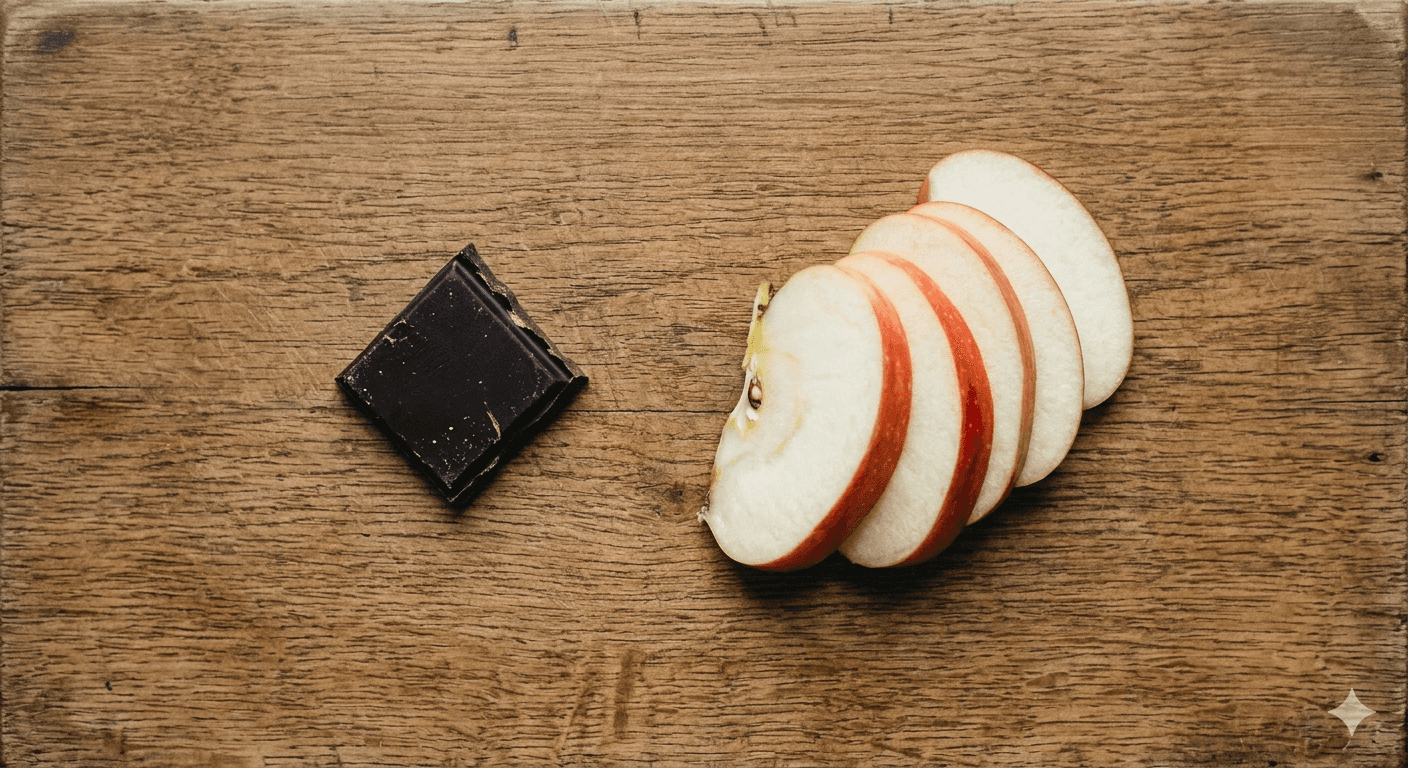
Dark chocolate, fruit, Greek yogurt with honey, dates — these are not "clean eating" compromises. They're genuine substitutions that deliver meaningful sweetness reward at a lower and less processed sugar load. The brain receives a sweet reward; the dopamine loop is partially satisfied; the threshold gradually adjusts.
Principle 3: Timing and Blood Sugar Stability
Many sugar cravings are physiological before they're habitual. Blood sugar drops — from skipped meals, inadequate protein and fat at previous meals, or high-glycaemic eating — create genuine physiological urgency for quick glucose. This urgency bypasses intentional decision-making and produces the "I need something sweet right now" feeling that precedes most regretted sweet consumption.
Addressing blood sugar stability reduces the physiological pressure driving cravings before they require willpower to resist. Practically: adequate protein and fat at each meal slow gastric emptying and glucose absorption, extending satiety and preventing the sharp dips that produce craving urgency. The research on what makes food satiating is directly applicable here: protein, fibre, and fat at meals are the most effective structural interventions against sweet cravings.
The One Habit Approach
The most effective strategy for reducing sugar cravings is not a comprehensive dietary overhaul. It's changing one specific sweet habit in one specific context, consistently, until the new behavior is automatic.
This is the core of the behavioral approach: identify the highest-frequency sweet habit (the daily afternoon chocolate, the dessert after every dinner, the sweet coffee), and replace it with a deliberate alternative at that specific trigger point. Not all sweet consumption — one habit, one context.
The specificity matters. "Eat less sugar" is not a habit. "After lunch, have two squares of dark chocolate instead of a chocolate bar" is a habit — it has a specific cue (after lunch), a specific routine (two squares of dark chocolate), and a specific reward (genuine sweetness satisfaction, less dopamine spike). Over 4-6 weeks of consistent execution, the new routine becomes the default. The threshold has shifted. The loop has been rewritten.
This one-habit approach aligns exactly with how food habits actually form: through consistent repetition in a specific context, with a genuine reward, until the behavior is automatic. Attempting to change all sweet consumption simultaneously produces the restriction response and fails. Changing one habit in one context produces a genuine, durable change.
"The clients who actually reduce their sugar intake long-term are almost never the ones who try to eliminate it. They're the ones who found their main trigger point — for most people it's the 3pm drop or after dinner — and built a deliberate substitute there. Two squares of dark chocolate, a piece of fruit, Greek yogurt. Not a reward for being good. A genuine alternative that their brain accepts as satisfying. Four weeks of that and the trigger changes."
— Irene Astaficheva, PN1, PN-SSR, GGS-1
What The Sweet Spot Habit Is Actually Addressing
The Sweet Spot habit in Eated App isn't about eliminating sugar — the name says as much. It's about reducing dependency on it. Specifically: reducing the degree to which sweet taste is required to feel satisfied, reducing the automatic and non-hunger-driven sweet consumption, and building genuine alternative responses to the triggers that currently produce sweet cravings.
The daily task structure of the habit matters here. Generic advice says "eat less sugar." What actually changes behavior is specificity: on a given day, a specific action in a specific context. Try ending dinner with a small piece of fruit instead of something processed. Notice what actually satisfies the post-meal sweetness signal — and whether the fruit is enough.
This kind of micro-observation, practiced consistently, gradually builds a different relationship with sweetness. Not restriction. Not elimination. A genuine shift in what satisfies.
Honest Limitations
Sugar craving severity varies considerably by individual. People with insulin resistance, blood sugar dysregulation, or PCOS may experience more physiologically driven cravings that behavioral changes alone don't fully address — medical assessment and management of the underlying condition is relevant.
The research on behavioral approaches to sugar reduction is mostly short-term (4-12 weeks). Long-term maintenance data is limited. Relapse after dietary change is common and not a signal of permanent failure — habit formation research shows that habit strength is resilient even after breaks, if the original behavior was established through consistent practice.
FAQ
Why do I crave sugar specifically when tired or stressed? Because tired and stressed states are low-dopamine states. Sugar produces a rapid dopamine spike that temporarily addresses the deficit — the brain is doing exactly what it's designed to do, seeking reward when reward levels are low. The problem is the source, not the mechanism. Building alternative dopamine sources for tired and stressed states (exercise, social connection, engaging activity) reduces the pressure that food is carrying.
Is it true that sugar is addictive? The neuroscience shows meaningful parallels between sugar consumption and addictive behavior patterns — tolerance, craving, reward sensitization. Whether "addiction" is the right clinical term is debated. What's clearly established is that sugar activates the same reward circuitry as substances of abuse, and that high habitual sugar intake raises the reward threshold, requiring more for equivalent satisfaction. Behavioral approaches that reduce habitual sugar consumption work with this mechanism rather than against it.
Does dark chocolate actually help with cravings or is that a myth? Dark chocolate (70%+ cacao) delivers genuine sweetness reward, contains compounds that affect mood (theobromine, phenylethylamine), and at lower quantities produces a meaningful reward signal with less sugar and fat than milk chocolate. Whether it "helps with cravings" depends on the context. As a deliberate substitute in a specific trigger context, it works. As an unlimited alternative, the quantity often increases to compensate for reduced reward per gram.
How long does it take to reduce sugar cravings? Taste threshold recalibration takes approximately 2-4 weeks of consistent reduced-sugar exposure. Habit change at trigger points takes 4-6 weeks of consistent new routine execution. Significant reduction in craving intensity typically becomes noticeable at 3-4 weeks. The change is gradual, not sudden — which is why the gradual reduction approach works and cold turkey doesn't.
What about artificial sweeteners — do they help? They provide sweetness without glucose, which reduces caloric intake and blood sugar impact. They don't recalibrate the sweetness threshold — if anything, high-intensity sweeteners maintain high threshold sensitivity. For people specifically trying to reduce sweetness dependency rather than just caloric intake, artificial sweeteners are less useful than gradual natural sugar reduction.
Bottom Line
Sugar cravings are a conditioned dopamine response, strengthened by repeated high-sugar consumption and activated by low-dopamine states — tiredness, stress, boredom, blood sugar dips. Cold turkey restriction amplifies the craving rather than reducing it. Gradual threshold shifting, specific habit substitution at trigger points, and blood sugar stability reduce cravings through the mechanism rather than against it.
One habit, one trigger point, four to six weeks of consistent execution. That's where durable change in sugar consumption actually comes from.
Download Eated
The Sweet Spot is one of eight habits in Eated — built around exactly this approach: one specific daily action at your highest-leverage trigger point, with the explanation of why it works. The Eated app is free to download on iOS. 7-day free trial · $9.99/month or $59.99/year after.