Calorie counting fails for most people — not because they lack willpower, but because it works against how the human body and mind actually function. Research shows that 95% of people who lose weight through calorie restriction regain it within 1–5 years, often gaining back more than they lost. This isn't a personal failure. It's a predictable outcome of a flawed method.
There are three distinct reasons calorie counting doesn't work: it triggers metabolic compensation, it's behaviorally unsustainable, and it damages your relationship with food. Understanding each helps you find an approach that actually sticks.
The Metabolic Problem: Your Body Fights Back
When you consistently eat fewer calories than your body expects, it adapts. This is called metabolic adaptation — and it's one of the most well-documented phenomena in nutrition science.
The process works like this: caloric restriction raises ghrelin (the hunger hormone) and suppresses leptin (the satiety hormone). A landmark study published in the New England Journal of Medicine followed contestants from The Biggest Loser and found that, one year after the show, their resting metabolic rates had dropped significantly — and hunger hormones remained elevated for years after. The body had recalibrated to defend against further weight loss.
This means the longer you restrict calories, the harder your body works to undo it. You're fighting your own biology.
"In my coaching practice, I've seen this pattern hundreds of times. A client will follow a calorie deficit for weeks, lose weight, then hit a wall — not because they stopped trying, but because their body literally became more efficient at burning fewer calories. The math stops working. And when they return to normal eating, the weight returns faster than it left." — Irene Astaficheva, certified nutritionist, co-founder of Eated
The Behavioral Problem: Adherence Collapses Over Time
Even if calorie restriction worked metabolically, the behavioral evidence is damning.
MyFitnessPal — the most downloaded calorie-tracking app in the world — has over 200 million registered users. The vast majority quit within weeks. Studies on dietary adherence consistently show that tracking-based approaches have dropout rates of 50–80% within the first three months.
Why? Because calorie counting demands constant cognitive load. Every meal becomes a math problem. You need to weigh food, find accurate database entries, account for oil used in cooking, adjust for restaurant estimates. A 2017 study in Nutrients found that calorie tracking is associated with increased anxiety around food, preoccupation with eating, and — paradoxically — less consistent dietary patterns over time.
The effort required to maintain calorie counting is simply incompatible with real life. A work trip, a dinner party, a stressful week — any disruption breaks the chain. And once the chain breaks, most people don't restart.
The Psychological Problem: It Creates the Wrong Relationship with Food
Calorie counting attaches a numerical value to everything you eat. Over time, this trains your brain to categorize foods as "safe" or "dangerous," to feel guilt after exceeding a daily number, and to see eating as a problem to be controlled rather than a normal human function.
Research on dietary restraint shows that weight-related guilt and shame are directly linked to weight gain — not loss. The psychological pressure created by tracking often leads to the restriction-binge cycle: a period of strict adherence followed by a reactive overeating episode, followed by guilt, followed by more restriction.
This cycle is common, well-documented, and hard to exit once established. Calorie counting, for many people, is the entry point.
What Actually Works: Habit-Based Eating
The evidence points toward a different model — one built on building automatic behaviors rather than conscious calculation.
Behavioral research on habit formation shows that sustainable dietary change happens when eating decisions become habitual rather than deliberate. You don't think about brushing your teeth — you just do it. The goal with eating habits is the same: build routines that don't require willpower to maintain.
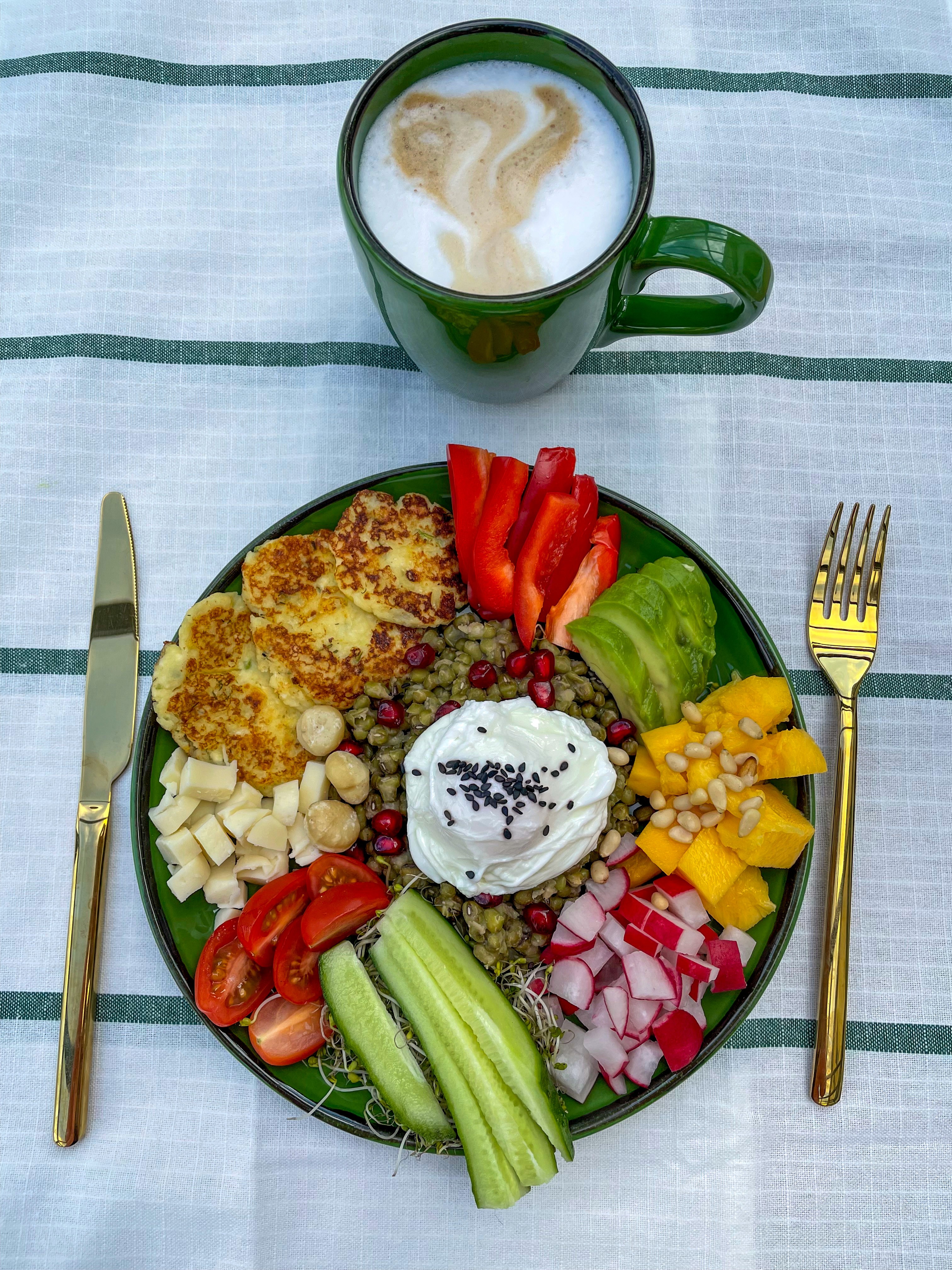
The Harvard Healthy Eating Plate, developed by nutrition scientists at Harvard T.H. Chan School of Public Health, provides a practical framework for this. Instead of counting calories, it uses visual portioning — half the plate vegetables and fruits, a quarter whole grains, a quarter protein — to guide balanced meals without measurement.
This approach works because:
It scales to any context — restaurants, travel, social meals — without requiring calculations
It addresses meal composition, not just quantity, which better reflects how food affects energy and satiety
It builds pattern recognition over time, making good choices progressively more automatic
At Eated, we built our entire product around this model. Instead of logging calories, users log meals to see plate balance. Instead of tracking numbers, they receive next-day insights based on their actual eating patterns. Instead of willpower, we focus on building one habit at a time through structured daily micro-tasks and guided learning.
The result is an approach that gets easier over time rather than harder — the opposite of calorie counting.
A Note on When Calorie Awareness Is Useful
Calorie counting isn't always harmful. For people recovering from restrictive eating disorders, working with clinical dietitians on specific medical goals, or athletes managing performance nutrition, calorie tracking under professional guidance can serve a purpose.
The problem is its application as a default tool for general healthy eating — where the evidence doesn't support it and the costs are often significant.
Frequently Asked Questions
Why do I lose weight when I count calories but gain it back when I stop?
Because calorie restriction produces temporary metabolic changes — your body lowers its resting metabolic rate and increases hunger hormones in response to a deficit. When you return to normal eating, you're doing so with a slower metabolism and heightened appetite. This is a physiological response, not a lack of discipline.
Is calorie counting ever accurate?
Calorie counts on food labels are allowed to be off by up to 20% in the US. Restaurant meals are routinely underestimated. Calorie databases have significant variation for homemade and mixed dishes. Most people also underestimate portion sizes. In practice, the data you're tracking is approximate at best.
What should I track instead of calories?
Focus on meal composition rather than calories. Does your plate include a good source of protein? Enough vegetables? Are you eating at consistent times? Are you stopping when satisfied rather than full? These questions build more useful eating habits than daily calorie targets.
How long does it take to build a food habit?
Research suggests food habits take anywhere from 18 to 254 days to form, depending on the individual and the complexity of the behavior. The practical implication: commit to one small habit at a time, not a complete diet overhaul.
What is the Harvard Plate method?
The Harvard Healthy Eating Plate is an evidence-based guide to meal composition developed by Harvard T.H. Chan School of Public Health. It recommends filling half your plate with vegetables and fruits, a quarter with whole grains, and a quarter with protein, plus healthy fats and water. It's a visual framework that replaces calculation with pattern recognition.
The Bottom Line
Calorie counting fails because it works against your metabolism, demands more sustained effort than most people can maintain, and creates a psychologically fraught relationship with food. The alternative isn't less discipline — it's smarter discipline. Building automatic habits around meal composition, eating timing, and body awareness produces lasting results because it works with your biology instead of against it.
If you're done counting and ready to build habits that actually stick, try the Eated Habit Wheel — a free framework to help you understand where you are today and what to change first.