
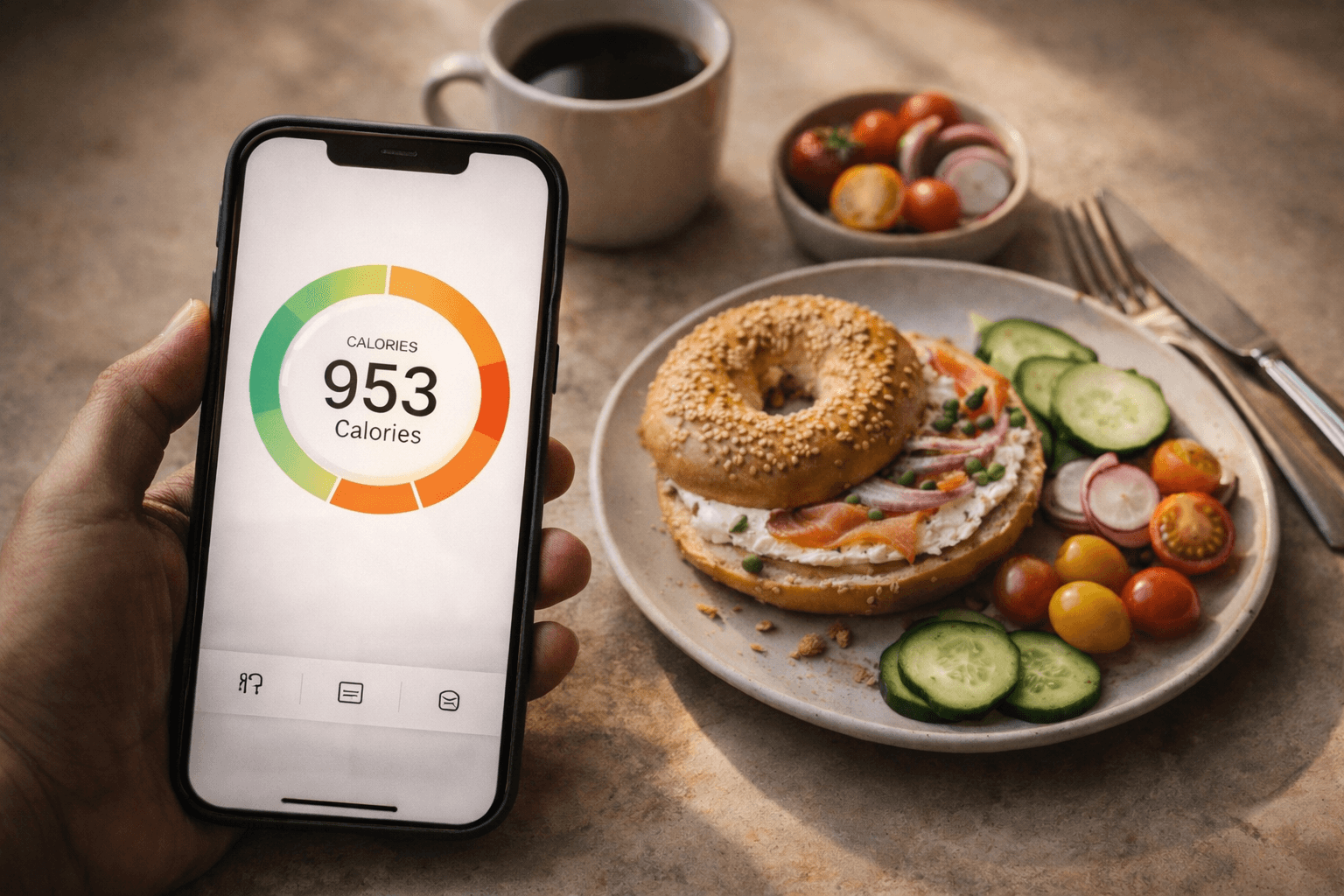
Lose It! is one of the most straightforward calorie tracking apps on the market — fast to set up, simple to use, and genuinely effective for people who want to count calories without complexity. Eated doesn't count calories at all. It builds eating habits using the Harvard Plate Method instead. These two apps are solving the same surface-level problem — eating better — through mechanisms that have almost nothing in common. Which one is right for you depends entirely on what you actually need to change.
What Lose It! Is Built On
Lose It! launched in 2008 and has since helped users collectively lose over 112 million pounds, according to the company's own data. Its core model is clean and unambiguous: set a daily calorie budget, log every meal, stay within the budget, lose weight.
What makes Lose It! stand out from competitors like MyFitnessPal is its simplicity and price. The interface is uncluttered, onboarding takes minutes, and the free tier is genuinely usable — it includes a personalized calorie budget, food search across a database of 47 million items, basic macro tracking, and weight logging. The premium tier, priced at approximately $39.99 per year (around $3.33 per month), adds barcode scanning, macro goals, hydration and sleep tracking, fitness device integrations, and social challenges.
The app also features Snap It — an AI-powered photo logging tool that estimates calories from a meal photo. In testing, accuracy is reasonable for simple foods and branded products but drops significantly for mixed dishes, home-cooked meals, and restaurant portions. For packaged foods with barcodes, the scanner is fast and reliable.
Lose It! has a 4.8-star rating on the App Store from over 557,000 reviews — one of the highest in its category. Users consistently praise its simplicity, the effectiveness of its calorie budget system, and the motivating milestone tracking that shows progress in concrete terms.
What Eated Is Built On
Eated approaches the problem from a different direction. Rather than asking "how many calories did you eat today?", Eated asks "what patterns are you building?"
The product is built on habit formation science and the Harvard Plate Method — a visual framework for meal composition developed by Harvard T.H. Chan School of Public Health. Users photograph meals to see plate balance rather than calorie counts. They select one eating habit from eight evidence-based options and work through daily micro-tasks over 8 days, guided by Irene's video coaching. Next-day personalized insights highlight patterns across their actual meals.
No calorie budget. No database searching. No daily number to hit.
The underlying logic is that calorie tracking requires ongoing deliberate effort — and deliberate effort is finite. Habit formation replaces deliberate choices with automatic ones, making healthy eating progressively less effortful over time rather than consistently demanding.
"Lose It! is probably the most honest calorie tracking app available — it does exactly what it says without a lot of noise. But the question I always ask clients who've used it is: what happens when you stop? For most people, the weight comes back because the tracking was doing the work, not the habit. That's the gap Eated is designed to fill." — Irene Astaficheva, certified nutritionist, co-founder of Eated
How They Compare — A Side-by-Side Look
Category | Eated | Lose It! |
|---|---|---|
Core approach | Habit formation via visual plate balance | Calorie budget tracking |
Food logging | Meal photos — plate composition | Manual entry, barcode scan, or photo |
Calorie tracking | No | Yes — central feature |
Framework | Harvard Plate Method | Personal daily calorie budget |
Database | Not applicable | 47 million food items |
Habit building | Core feature — structured 8-day programs | Not included |
Coaching | AI-generated daily and weekly insights | None (Premium adds social challenges) |
Photo logging | Plate balance analysis | Snap It — calorie estimation |
Fitness integrations | No | Yes — Apple Health, Fitbit, Garmin (Premium) |
Social features | No | Community challenges (Premium) |
Platform | iOS | iOS and Android |
Free tier | Yes — with 7-day trial of full features | Yes — genuinely usable for basic tracking |
Premium price | Subscription with 7-day free trial | ~$39.99/year (~$3.33/month) |
Lifetime option | No | Yes — $189.99 one-time |
Where Lose It! Works Well
Lose It! is the right tool for a specific kind of user, and it's worth being direct about who that is.
People who are new to food awareness and genuinely don't know where their calories are coming from will find Lose It! clarifying. Many users report that the first few weeks of logging revealed patterns they had no idea existed — how many calories were in routine snacks, how large their portions actually were, where the hidden additions (sauces, oils, drinks) were coming from. As a short-term audit tool, it works well.
People motivated by numbers and data — who find hitting a daily target satisfying and who engage with progress charts and milestone tracking — will respond to Lose It!'s feedback loop. The app is well-designed for this type of motivation.
Budget-conscious users who want a premium tracking experience without Noom or MyFitnessPal's price point will find Lose It!'s $39.99 annual plan genuinely competitive. It delivers comparable tracking functionality to more expensive apps.
Android users who need cross-platform access will find Lose It! more compatible than Eated, which is currently iOS only.
The significant caveat: Lose It! works as long as you use it. The question every consistent user eventually faces is what happens when logging stops — through a busy week, a holiday, a stressful month. For most people, the answer is that progress reverses, because the tracking was doing the behavioral work, not an internalized habit.
Where Eated Works Better
People who've tried calorie tracking apps before and quit. If you've used Lose It!, MyFitnessPal, or a similar app and found the logging unsustainable, a different mechanism is needed — not a better logging app. Eated's approach doesn't ask you to log every item every day indefinitely.
People who want progress that survives disruption. A habit-based approach builds automatic behavior that functions even during busy periods. When you miss a day in Eated, you haven't lost a streak of accurate data — you've just had one day without practice. The habit continues to exist.
People whose lives don't accommodate daily logging. Restaurant meals, shared dishes, home cooking with variable ingredients — these are genuinely difficult to log accurately. The Harvard Plate Method works in all of these contexts without calculation or estimation.
People who want to improve meal quality, not just quantity. Lose It!'s calorie system is agnostic about food quality — 500 calories of vegetables and 500 calories of processed snacks are recorded identically. Eated's plate-balance approach focuses specifically on composition: are you getting enough vegetables, quality protein, and whole grains? That distinction matters for long-term health outcomes beyond weight.
The Accuracy Question
One honest limitation of Lose It! worth addressing: calorie accuracy. The app has been tested at approximately ±5.9% accuracy for food entries — reasonable for weight loss purposes, but not precise. User-contributed database entries introduce additional variability. The Snap It photo feature struggles with mixed dishes and home-cooked meals, where accuracy drops noticeably.
This isn't a criticism unique to Lose It! — it applies to every calorie tracking app, because food databases and portion estimation are inherently imprecise. But it's worth knowing that the number you're hitting each day is an approximation, not an exact figure.
Eated sidesteps this problem by design — plate composition doesn't require numerical accuracy, only visual proportion. Whether your chicken breast is 140g or 160g matters far less than whether it occupies approximately a quarter of your plate.
For more on why precise calorie tracking often fails in practice, see our post on why calorie counting doesn't work.
Frequently Asked Questions
Is Eated better than Lose It!?
They solve different problems. Lose It! is better for people who want a simple, affordable calorie tracking system and respond well to data and number-based feedback. Eated is better for people who want to build automatic eating habits without tracking, who find daily logging unsustainable, or who want to improve meal composition rather than just manage calorie totals.
Is Lose It! free?
Yes — Lose It! has a genuinely usable free tier that includes a daily calorie budget, food search, basic macro tracking, and weight logging. Premium features (barcode scanning for new users, macro goals, hydration tracking, fitness integrations, social challenges) cost approximately $39.99 per year.
Does Lose It! work without counting calories?
No — calorie counting is the central mechanism of Lose It!. The app is built around a daily calorie budget, and logging meals to that budget is how the product works. There is no calorie-free mode.
What happens if I stop using Lose It!?
Most users who stop logging in Lose It! find that progress slows or reverses, because the app was doing the behavioral management rather than an internalized habit. This is the fundamental limitation of tracking-based approaches — they require ongoing active use to maintain results.
Can I use Eated if I've never tracked calories before?
Yes — Eated doesn't require any prior nutrition knowledge or calorie tracking experience. The Harvard Plate Method is a visual framework that anyone can apply from the first meal. The habit programs introduce one behavior at a time, making it accessible for complete beginners.
The Bottom Line
Lose It! is one of the best calorie tracking apps available — simple, affordable, and effective for users who engage with it consistently. If calorie awareness is what you need and you're confident you can maintain daily logging, it's worth trying.
Eated is for people who want something different — an approach that builds eating habits that work even when you're not actively thinking about food. No budget to hit, no database to search, no streak to protect.
If that sounds like what you've been looking for, download Eated on the App Store and start your 7-day free trial. Or try the free Habit Wheel first — a five-minute tool to identify which eating habit to build first.