Cronometer and Eated are built for different people — and this is probably the most honest comparison in this series. Cronometer tracks up to 84 micronutrients from a verified scientific database. It is the most data-precise nutrition app available to consumers and the tool most often recommended by registered dietitians in clinical settings. Eated tracks none of that. It builds eating habits using the Harvard Plate Method without any numerical tracking at all. These two apps are not really competing for the same user — but if you're deciding between them, this comparison will tell you exactly which one you need.
What Cronometer Is Built On
Cronometer launched in 2005 and has built a reputation as the most scientifically rigorous nutrition tracker available to the general public. Its core differentiator is data quality. While most apps rely on user-submitted or manufacturer-provided nutrition data, Cronometer's primary database draws from the USDA SR Legacy, the Nutrition Coordinating Center Database (NCCDB), and other verified research sources. Every generic food entry — a chicken breast, a cup of spinach — uses lab-analyzed nutritional data, not crowd-sourced estimates.
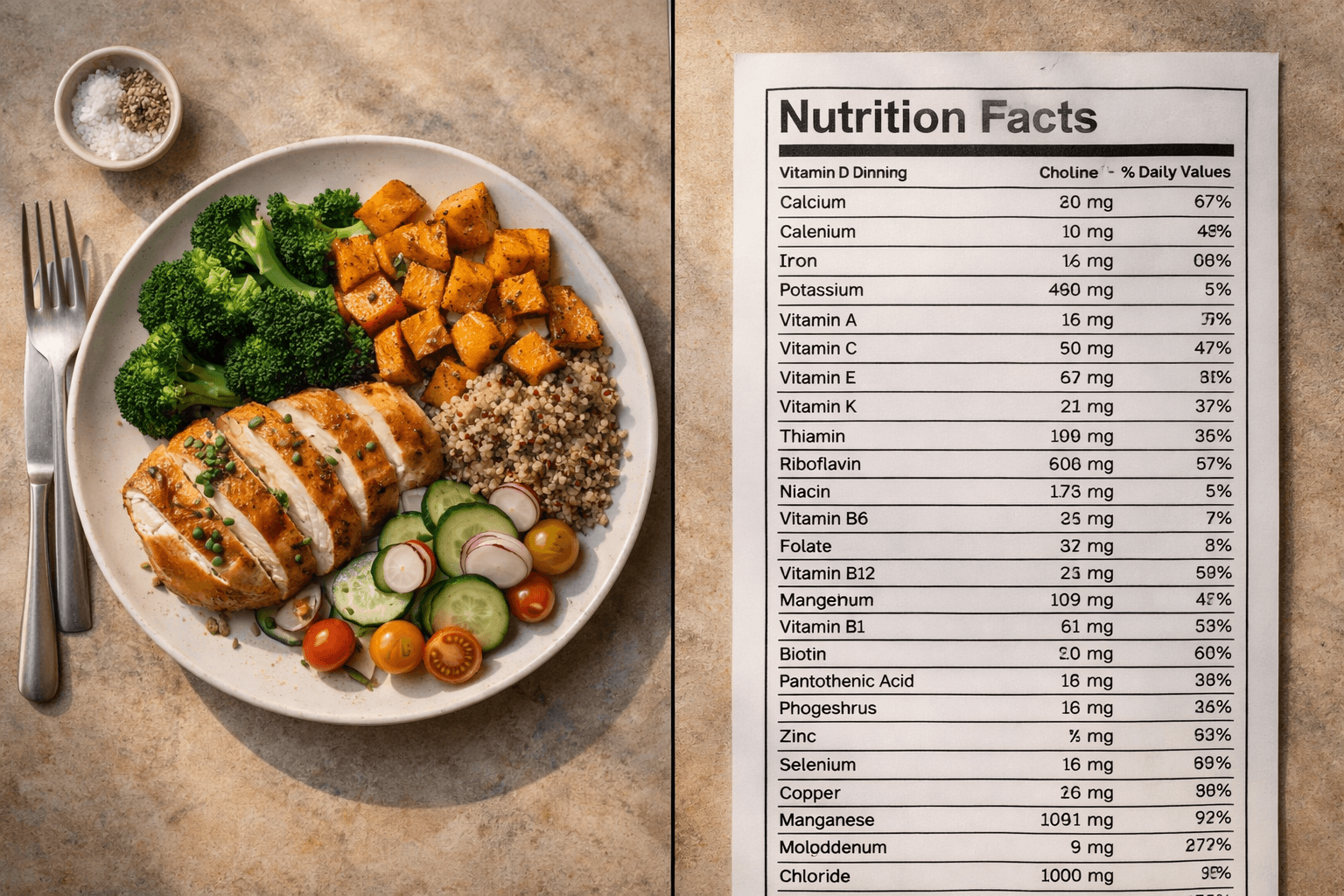
The result is a database of over 300,000 foods tracking up to 84 micronutrients — vitamins, minerals, amino acids, fatty acids — compared to the 5-25 nutrients most competing apps track. For users who need to monitor specific micronutrient gaps — vitamin D deficiency, iron levels, B12 intake on a vegan diet, potassium restrictions for kidney conditions — Cronometer has no real alternative at any price point.
The free tier is unusually generous: full access to the core tracking functionality, complete micronutrient database, and all reporting, with ads and a 7-day data history limit. The Gold tier at approximately $4.99-10.99/month (or $49.99-59.88/year depending on plan) removes ads, extends history to unlimited, adds Oracle Nutrient Search (which identifies which foods would best fill your current nutrient gaps), custom biometrics, advanced fasting tools, and blood work integration.
Cronometer Pro, at $39.99/month, is a separate product built for healthcare professionals — dietitians, nutritionists, research teams — who need HIPAA compliance, client management, and professional reporting.
The interface is dense with information by design. This is not a beginner-friendly app. The learning curve is steeper than any other consumer nutrition tool, and the data visualization, while powerful, takes time to interpret meaningfully. Reviews consistently note that it looks like what it is: a tool built by people who care deeply about nutritional science and less about visual accessibility.
What Eated Is Built On
Eated starts from a fundamentally different premise. Rather than asking what nutrients you consumed today, it asks what eating behaviors you are building for the long term.
The product is built on habit formation research and the Harvard Plate Method — a visual framework for meal composition developed by Harvard T.H. Chan School of Public Health. Users photograph meals to see plate balance rather than nutrient breakdowns. They select one eating habit from eight evidence-based options and work through structured daily micro-tasks over 8 days, guided by Irene's video coaching. Personalized daily and weekly insights surface patterns across their actual meals over time.
No micronutrient tracking(yet). No database. No numerical targets of any kind.
The logic: most people don't fail at healthy eating because they lack data. They fail because healthy choices haven't become automatic. Cronometer gives you precise data to make better decisions. Eated builds the habits so that better decisions happen without deliberate effort.
"Cronometer is the app I sometimes recommend to clients who need to verify specific clinical goals — checking that a plant-based diet covers all essential amino acids, or confirming adequate iron intake during pregnancy. It's a clinical tool and a very good one. But for the vast majority of people who just want to eat better consistently, the data depth is overwhelming, and the habit formation never happens because all the energy goes into logging." — Irene Astaficheva, certified nutritionist, co-founder of Eated
How They Compare — A Side-by-Side Look
Category | Eated | Cronometer |
|---|---|---|
Core purpose | Build automatic eating habits | Track micronutrient and calorie intake precisely |
What you log | Meal photos — plate composition | Every food item with gram-level detail |
Nutrients tracked | None — visual plate balance only | Up to 84 micronutrients |
Data accuracy | Not applicable | Highest available — USDA and NCCDB verified |
Framework | Harvard Plate Method | Personal calorie and nutrient targets |
Habit building | Core feature — structured 8-day programs | Not included |
Coaching | AI-generated daily and weekly insights | None (Pro adds professional oversight) |
Difficulty level | Minimal — one photo per meal | Steep — detailed manual logging required |
Best for | Building sustainable everyday eating habits | Clinical nutrition monitoring, micronutrient gaps |
Recommended by | Nutritionists focused on behavior change | Registered dietitians, clinical settings |
Platform | iOS | iOS, Android, web |
Free tier | Yes — with 7-day trial of full features | Yes — generous, includes full micronutrient tracking |
Premium price | Subscription with 7-day free trial | ~$4.99-10.99/month or ~$49.99-59.88/year (Gold) |
Where Cronometer Works Well
Cronometer is the right tool in several specific situations — and it excels in all of them.
People with identified clinical nutrition needs. If a doctor has flagged specific deficiencies — vitamin D insufficiency, low B12, inadequate iron, high sodium intake linked to blood pressure — Cronometer tracks those with a precision that no other consumer app matches. For people managing conditions that require careful monitoring of potassium, phosphorus, or other specific nutrients, it's the only credible option.
Vegans and strict plant-based eaters who need to ensure nutritional completeness — tracking essential amino acid profiles, B12, iron, zinc, and omega-3 sources — will find Cronometer's depth invaluable. The Oracle Nutrient Search feature, which identifies the most nutrient-dense foods to fill current gaps, is particularly useful for this use case.
People following specialized dietary protocols — ketogenic, carnivore, elimination diets — who need to verify that macronutrient ratios and specific micronutrients stay within therapeutic ranges.
Nutrition students and health professionals who want to understand food composition at a scientific level. Cronometer is used in academic settings precisely because its data sources are verifiable and its methodology is transparent.
Serious biohackers focused on optimal nutrition rather than just weight management — users who track blood work alongside dietary intake and want to correlate specific nutrient patterns with biomarkers.
Where Eated Works Better
The honest answer is that most people who download Cronometer are not in the categories above — they're everyday people who want to eat better and heard Cronometer was accurate. For that user, Cronometer's depth is counterproductive. The interface is complex, the logging is demanding, and the micronutrient data — while precise — doesn't translate into behavioral change by itself.
People who want to eat better without clinical-level monitoring. For most healthy adults whose goal is simply consistent, balanced eating, 84 micronutrients of data is more information than anyone needs to make the same handful of everyday decisions. Harvard Plate proportions — half vegetables and fruits, a quarter grains, a quarter protein — are enough of a framework for meaningful long-term improvement.
People who find detailed logging unsustainable. Cronometer's precision requires precision in return — gram-level portion entry, careful recipe construction, consistent daily logging. This is appropriate in clinical contexts where accuracy matters. For everyday use, it creates a maintenance burden that most people can't sustain.
People who want eating habits that function automatically. Data changes what you know. Habits change what you do automatically. For the goal of sustainable healthy eating — something that functions on a busy Tuesday without opening an app — habit formation is a more durable mechanism than nutritional awareness.
Beginners who would be overwhelmed by the interface. Cronometer is not designed as a first step. For someone just starting to think about eating better, encountering 84 nutrient targets on day one is more likely to produce anxiety than behavior change.
The Core Difference: Data vs. Behavior
Cronometer is built on the assumption that accurate data drives better decisions. This is true in clinical contexts — when a dietitian reviews a client's micronutrient logs, they can identify specific gaps and make targeted recommendations. The data is the point.
Eated is built on the assumption that most people already have enough information to eat better — the problem is that healthy choices aren't yet automatic. Behavioral research consistently shows that habit formation — building automatic responses to environmental cues — is more durable than knowledge-based decision-making, which degrades under stress, fatigue, and time pressure.
These two assumptions lead to completely different products. Neither is wrong — they're designed for different goals.
For more on why tracking-based approaches tend to have limited long-term impact, see our post on why calorie counting doesn't work.
Frequently Asked Questions
Is Eated better than Cronometer?
They serve different purposes. Cronometer is better for clinical nutrition monitoring, identifying micronutrient deficiencies, and supporting specialized dietary protocols. Eated is better for building sustainable everyday eating habits without data-intensive tracking. For most people whose goal is simply eating more consistently and balanced, Eated's approach is more practical. For people with specific clinical nutrition needs, Cronometer is the right tool.
Does Cronometer count calories?
Yes — calorie tracking is one of Cronometer's core features, alongside its extensive micronutrient database. The calorie data is drawn from verified scientific sources, making it more accurate than most competing apps.
Who uses Cronometer?
Cronometer is used by a wide range of people — from everyday users who want accurate nutrition data to registered dietitians, nutritionists, research teams, and clinical settings. Its Pro tier is specifically built for healthcare professionals who need client management and HIPAA compliance.
Is Cronometer free?
Yes — Cronometer's free tier is genuinely comprehensive, including full access to the micronutrient database and tracking for up to 300,000 foods. The main limitations are ads and a 7-day data history cap. The Gold tier removes these limitations and adds advanced features for approximately $4.99-10.99/month.
Can Eated replace Cronometer for someone with a vitamin deficiency?
No — and it's important to be direct about this. If you have a clinically identified nutrient deficiency that requires monitoring specific micronutrient intake, Cronometer (or a similar clinical tool, ideally under a dietitian's guidance) is the appropriate tool. Eated's plate-balance approach is not designed for clinical monitoring. It's designed for building general healthy eating patterns in people without specific medical nutrition needs. In future Eated might add features to work with nutrients, but now Eated can't do that.
The Bottom Line
Cronometer is the most scientifically rigorous nutrition tracking app available to consumers. If you need clinical-level micronutrient data — because of a medical condition, a specialized diet, or professional nutritional practice — it's the right choice and genuinely hard to match.
For everyone else — people who want to eat better, more consistently, without becoming amateur nutritional scientists — Eated's habit-based approach gets you where you want to go with far less friction.
If you're ready to build lasting eating habits rather than track data indefinitely, download Eated on the App Store and start your 7-day free trial. Or begin with the free Habit Wheel to identify which eating habit makes the most sense to build first.