Noom and Eated both claim to be about behavior change — not just calorie counting. But they get there through very different mechanisms. Noom combines psychology-based lessons with daily food logging and a color-coded calorie system. Eated skips calorie tracking entirely and focuses on building automatic eating habits through the Harvard Plate Method. If you're trying to decide between them, the difference comes down to one question: do you want to understand your eating patterns, or do you want to change them automatically?
What Noom Is Built On
Noom launched in 2016 and has since grown into one of the most recognized names in digital health, with millions of users worldwide. Its core premise is behavioral psychology — the idea that understanding why you eat the way you do produces lasting change.
In practice, Noom delivers this through daily mini-lessons (5-10 minutes each) grounded in psychology, a color-coded food logging system, personalized calorie targets, human coaching, and community groups. Foods are categorized as green (eat freely — vegetables, fruits), yellow (eat in moderation — lean proteins, dairy), and orange (limit — calorie-dense foods like oils and nuts).
The program calculates a daily calorie budget based on your weight, age, and goals, and the expectation is that you log every meal within that system. Coaches — available via in-app messaging — provide personalized feedback and accountability.
As of 2026, Noom Weight costs approximately $17-42 per month depending on plan length, with the 12-month plan being the most affordable at around $17/month billed annually. Noom also offers Noom Med, a separate telehealth program that includes prescription GLP-1 medications starting at $69/month plus medication costs.
Noom is genuinely different from a basic calorie counter. The psychology lessons are well-produced, the coaching is real (not just chatbots), and the color system is more nuanced than a simple calorie cap. For people who respond well to education and structured accountability, it delivers value.
What Eated Is Built On
Eated starts from a different premise entirely: most people already know enough about healthy eating. The problem isn't knowledge — it's that healthy choices aren't yet automatic.
Where Noom uses psychology education to increase awareness, Eated uses habit formation to reduce the effort healthy eating requires over time. The goal is not to help you understand your patterns — it's to help you build new ones that eventually run on autopilot.
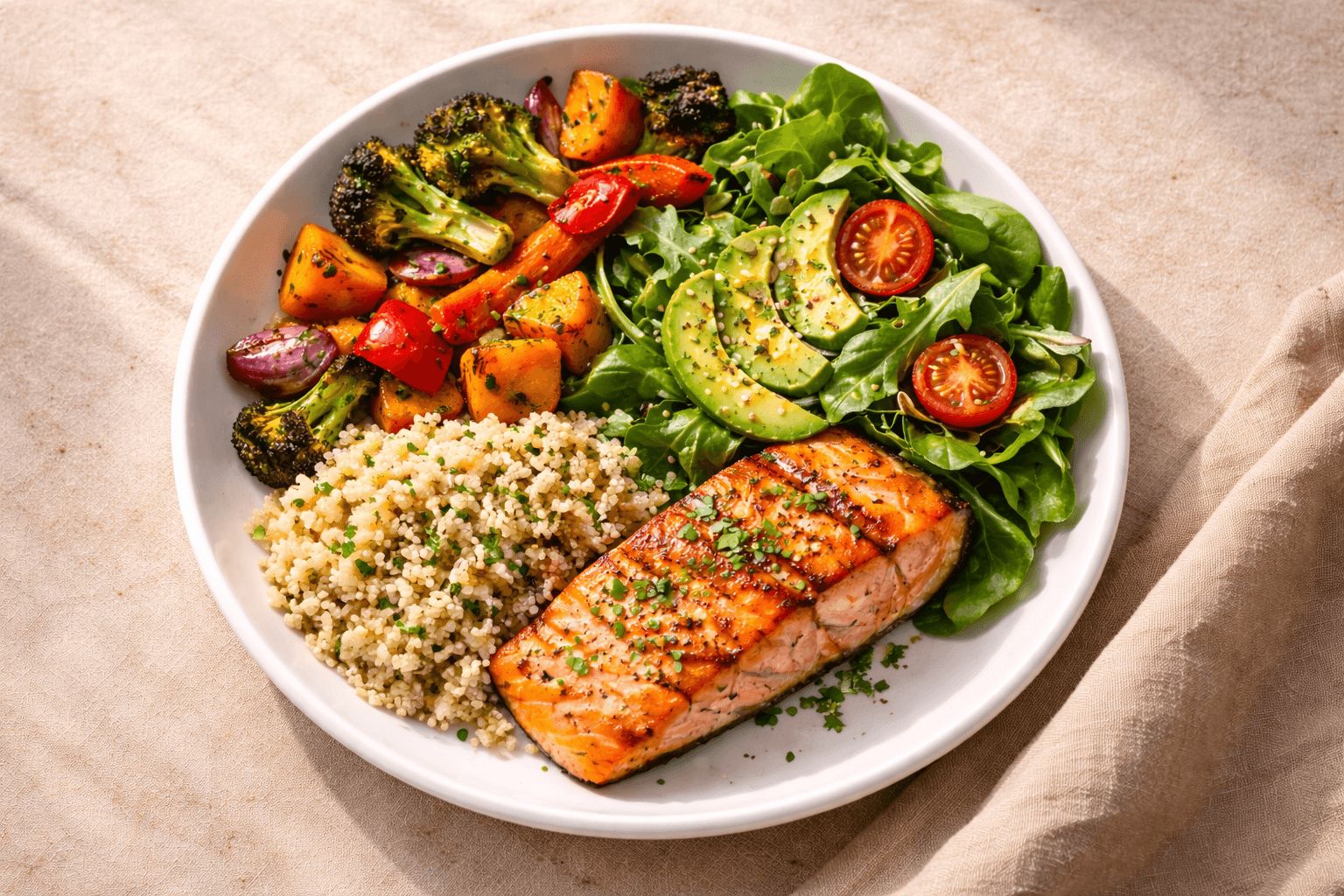
The mechanism is the Harvard Plate Method — a visual framework for meal composition developed by Harvard T.H. Chan School of Public Health. Instead of logging calories or categorizing foods by color, users photograph meals to see plate balance. Instead of daily lessons on psychology, users pick one eating habit from eight evidence-based options and work through structured daily micro-tasks over 8 days, guided by Irene's video coaching. Instead of tracking a number, they receive next-day personalized insights based on actual eating patterns.
No calorie budget. No color system. No daily weigh-ins.
"Noom deserves credit for bringing behavioral psychology into mainstream nutrition apps. The lessons are genuinely good. But in my clinical experience, understanding why you overeat doesn't automatically stop you from doing it. What changes behavior long-term is building a new default — and that requires repetition and habit formation, not just insight." — Irene Astaficheva, certified nutritionist, co-founder of Eated
How They Compare — A Side-by-Side Look
Category | Eated | Noom |
|---|---|---|
Core approach | Habit formation via visual plate balance | Psychology education + calorie tracking |
Food logging | Meal photos — plate composition | Every meal logged with color-coded calorie system |
Calorie tracking | No | Yes — daily calorie budget |
Framework | Harvard Plate Method | Green/yellow/orange food color system |
Daily lessons | 8-day micro-learning per habit with Irene | Daily 5-10 min psychology lessons |
Coaching | AI-generated daily and weekly insights | Human coaches via in-app messaging |
Community | Facebook support community | Group support communities |
Daily effort | Low — one meal photo | Moderate — daily logging + lessons |
Habit building | Core feature — structured 8-day programs | Secondary — lessons touch on habits |
Weight tracking | No | Daily weigh-ins encouraged |
Platform | iOS | iOS and Android |
Price | Free tier + 7-day trial of full features, ~$10 | ~$17-42/month depending on plan length |
GLP-1 support | No | Yes — via Noom Med (separate cost) |
Where Noom Works Well
Noom is a strong product for specific types of people and goals.
People who want to understand their relationship with food will find the psychology lessons genuinely valuable. Noom goes deeper than most apps into the cognitive and emotional patterns behind eating — stress eating, mindless snacking, social food pressures. If you've never examined these patterns, the lessons can be eye-opening.
People who thrive with structured accountability — daily check-ins, coach messaging, community groups — will find Noom's ecosystem motivating. The human coaching element is real and responsive, which is rare at this price point.
People open to calorie awareness who don't have a history of disordered eating may find the color system a gentler on-ramp than traditional calorie counting. Green/yellow/orange is more intuitive than hitting a precise daily number.
People considering GLP-1 medications can access Noom Med as an integrated clinical pathway, which combines behavioral coaching with medical support — a combination that has genuine clinical backing.
Where Eated Works Better
Eated is designed for a different user — and is honest about who that is.
People who've already tried Noom or similar apps and quit. The pattern with Noom is familiar: you engage well for the first few weeks, the lessons feel valuable, then life gets busy and the daily logging becomes a burden. Eated removes the logging burden entirely. One photo per meal, no color categorization, no calorie budget to hit.
People who find calorie-adjacent systems triggering. Even Noom's color system — despite being framed as non-restrictive — attaches a judgment value to every food. For people with a history of disordered eating or food anxiety, this can be counterproductive. Eated's plate-balance approach has no "bad" foods and no numerical targets.
People who want eating to become automatic, not just understood. Noom helps you understand your patterns. Eated helps you replace them. These are different outcomes — and for long-term behavior change, automaticity is more durable than insight.
People with busy, unpredictable schedules. Noom's daily logging and lesson commitment requires consistent engagement to deliver value. Eated's habit-based approach is designed to function even when life is chaotic — the habit itself becomes the anchor, not the app.
The Key Philosophical Difference
Noom believes that understanding drives change. Eated believes that repetition drives change.
Both have evidence behind them. Cognitive Behavioral Therapy — which Noom draws from — is one of the most studied behavior change frameworks in psychology. Habit formation research — which Eated is built on — shows that automatic behaviors are more durable than consciously maintained ones precisely because they don't rely on motivation or willpower.
The practical question is: which mechanism fits your life? If you have the time and inclination to engage with daily lessons and food logging, Noom offers a rich educational experience. If you want healthy eating to eventually require no conscious effort at all, Eated's habit formation model gets you there faster.
For a deeper look at why calorie-adjacent tracking tends to fail long-term, see our post on why calorie counting doesn't work.
Frequently Asked Questions
Is Eated better than Noom?
It depends on what you need. Noom is better for people who want psychology education, structured human coaching, and a guided calorie-awareness system. Eated is better for people who want to build automatic eating habits without tracking, who have found calorie-adjacent systems unsustainable, or who want a lower daily effort approach to consistent healthy eating.
Does Noom actually count calories?
Yes — despite its behavioral framing, Noom's core mechanism is a daily calorie budget combined with a color-coded food system based on calorie density. Users log every meal and are guided to stay within a personalized calorie target. The psychology lessons complement this system but don't replace it.
Is Noom worth the cost compared to Eated?
Noom costs significantly more — $17-42/month vs Eated's free tier with a 7-day trial of premium features. Whether Noom is worth it depends on how much value you get from the coaching and lesson content. If you engage consistently, the human coaching alone justifies the cost for many users. If you find yourself skipping lessons and logging sporadically, Eated's lower commitment model may deliver better results.
Can you use Eated after quitting Noom?
Yes — and many users find the transition natural. Noom builds awareness of what balanced eating looks like. Eated helps convert that awareness into automatic habits. The two approaches are complementary in sequence even if they work differently in parallel.
What is the main difference between Eated and Noom?
Noom combines psychology education with daily calorie tracking. Eated uses habit formation and visual plate balance with no calorie tracking. Noom aims to help you understand your eating patterns. Eated aims to help you change them automatically.
The Bottom Line
Noom is a thoughtfully built product that brings genuine behavioral science to nutrition. If you want structured coaching, psychology-based education, and are comfortable with a calorie-adjacent tracking system, it's worth considering.
Eated is built for people who want eating well to eventually require no effort at all — no logging, no calorie budgets, no color-coding. Just habits that run on autopilot.
If you're ready to try a different approach, download Eated on the App Store and start your 7-day free trial. Or begin with the free Habit Wheel to identify which eating habit to build first.